
Algebra · Concept hubDeep story

Combinatorics

1000 CEPlural formation across Indian prosody, coefficient arrays in China and the Islamic world, and early-modern European systematization

Can we count exploding possibilities without listing every one?

Where two intuitions collide

A few layered choices can outnumber the universe, yet symmetry and recursion fold that explosion into compact formulas.

This voyage is an editorial path for understanding, not a claim of direct historical influence or sole invention.

Understand it in one breath

From "how many possibilities?" to "what must appear?" Card hands, seatings, and lattice paths have different constraints; recurrences, bijections, generating functions, symmetry, and probability count them without duplication. Pascal's triangle is a common name for a binomial-coefficient array with earlier histories in several cultures, and combinatorics extends far beyond it.

At a glance

n

Coefficients (k=0,1,2,...)

0

1

1

1 1

2

1 2 1

3

1 3 3 1

4

1 4 6 4 1

5

1 5 10 10 5 1

6

1 6 15 20 15 6 1

Pascal’s triangle — row n contains the coefficients in the expansion of (a+b)ⁿ.

Concept

The mathematics of counting possible structures without duplication and proving what must occur even when exhaustive enumeration is impossible.

Key formula

(nk)=n!k!(nk)!\binom{n}{k} = \dfrac{n!}{k!(n-k)!}

Worked examples

  1. 1

    Q.Choose 2 people from a group of 5

  2. 2

    Q.How many 8-bit strings are there?

Ports in time

This concept was not invented in one instant

Follow the scenes to see problems, notation, standards of proof, and applications changing across different times and places.

1
AD 1150Scene 1 / 4Patan

Indian prosody — counting rhythms by recurrence

Building on prosodic traditions associated with Pingala, Virahanka, and Gopala, Hemachandra explained a recurrence for rhythms made of one- and two-beat syllables. Its modern Fibonacci connection does not make it the invention of binary notation.

The recorded place matches a canonical map anchor

Continue this scene on the map

2
AD 1654Scene 2 / 4Paris

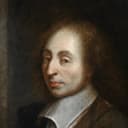
Pascal — systematizing a triangle with several earlier histories

Pascal linked a coefficient array with combinations, binomial powers, and probability. Earlier versions associated with Jia Xian and Yang Hui and with authors in the Islamic world mean the array itself was not his first invention.

The recorded place matches a canonical map anchor

Continue this scene on the map
3
AD 1741Scene 3 / 4Berlin

Euler — connections and generating functions

Euler compressed routes into graph connectivity in the 1736 bridge problem, then stored whole families of integer-partition counts as coefficients of generating functions in a 1741 manuscript.

The recorded place matches a canonical map anchor

Continue this scene on the map
4
AD 1930Scene 4 / 4Cambridge

After Ramsey — proving inevitability without listing everything

Ramsey-type inevitability, probabilistic existence proofs, and computer-assisted case checking expanded combinatorics from enumeration into a study of unavoidable structure.

The recorded place matches a canonical map anchor

Continue this scene on the map

Modern applications

Probability calculations, cryptographic key-space analysis, RAID parity, coding theory, algorithmic complexity, and entropy in statistical physics.

Beyond MathVoyage

Curated sources and problems. Bring one discovery back from OEIS, Project Euler, MathOverflow, or arXiv.

No concept belongs to one person

Follow people who played different roles

These are not inventor credits. They are different ports: opening a problem, sharpening a language, or carrying it into another world.

Number lenses

A concept looks different when its world of numbers changes

These numbers are editorial lenses for the voyage, not required prerequisites.

Concept genealogy

What supports it, and what does it open?

Concepts arriving from before

Current port

Combinatorics

Only direct editorial links are shown; this is not a complete learning order or historical influence line.