A note in the margin
Fermat wrote in the margin of his copy of Diophantus: “I have discovered a truly marvelous proof, which this margin is too narrow to contain.”
The recorded place matches a canonical map anchor
Continue this scene on the mapDeparture question
Find order without counting everythingPort 15 of 16Trace recurring structure through exploding possibilities, divisibility, and the apparent irregularity of primes.
This voyage is an editorial path for understanding, not a claim of direct historical influence or sole invention.
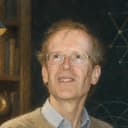
"x² + y² = z² has infinitely many integer solutions, but for n ≥ 3 there are none." Fermat's marginal note became public in a posthumous 1670 edition. Wiles worked privately from 1986, announced a result in 1993, and repaired a gap with Richard Taylor in 1994. The two papers appeared in the 1995 Annals of Mathematics.
Year | Person | Advance |
|---|---|---|
1637 | Fermat | Conjectured in a book margin (a copy of Diophantus) |
1770 | Euler | Proof for n = 3 (though a gap was later found) |
1825 | Dirichlet and Legendre | n = 5 |
1839 | Lamé | n = 7 (using Germain’s theorem) |
1908 | Wolfskehl Prize | 100,000-mark prize — inspired countless false proofs |
1955 | Taniyama–Shimura conjecture | Conjectured that every elliptic curve is modular |
1982 | Frey | Proposed that an FLT counterexample ⇒ a non-modular elliptic curve |
1986 | Ribet | Proved the epsilon conjecture → completed the bridge between FLT and Taniyama–Shimura |
1993 announcement / 1994 repair / 1995 publication | Andrew Wiles (+ Richard Taylor) | Two papers completed the argument after years of concentrated private work |
The simplest-looking statement took 358 years to solve — and the solution came from entirely different fields: elliptic curves and modular forms.
No integer solutions for x^n + y^n = z^n when n>2 — Fermat's 1637 margin note, finally proved by Wiles in 1994.
Q.n=2: 3² + 4² = ?
Q.n=3: are there positive integer solutions to x³ + y³ = z³?
Ports in time
Follow the scenes to see problems, notation, standards of proof, and applications changing across different times and places.
Fermat wrote in the margin of his copy of Diophantus: “I have discovered a truly marvelous proof, which this margin is too narrow to contain.”
The recorded place matches a canonical map anchor
Continue this scene on the mapEuler used infinite descent to establish the n=3 case, but even he could not reach a general proof.
No reliable place is given, so time continues without an invented pin
Continue through the world of this yearPaul Wolfskehl endowed a 100,000-mark prize for a proof, drawing generations of professional and amateur attempts.
No reliable place is given, so time continues without an invented pin
Continue through the world of this yearAfter seven years of secret work and another year repairing a critical gap, Andrew Wiles completed the proof — 357 years after Fermat’s marginal note.
The recorded place matches a canonical map anchor
Continue this scene on the mapA driving force behind algebraic geometry, Galois representations, modular forms, and the broader toolkit of modern number theory. The mathematics built for the proof is an even larger legacy than the theorem itself.
Curated sources and problems. Bring one discovery back from OEIS, Project Euler, MathOverflow, or arXiv.
No concept belongs to one person
These are not inventor credits. They are different ports: opening a problem, sharpening a language, or carrying it into another world.
Number lenses
These numbers are editorial lenses for the voyage, not required prerequisites.
Trace recurring structure through exploding possibilities, divisibility, and the apparent irregularity of primes.
Open the number voyage
Trace recurring structure through exploding possibilities, divisibility, and the apparent irregularity of primes.
Open the number voyage
Trace recurring structure through exploding possibilities, divisibility, and the apparent irregularity of primes.
Open the number voyage
Concept genealogy
Concepts arriving from before
Current port
Fermat's Last Theorem
Concepts opened from here
No direct successor port is curated yet.
Only direct editorial links are shown; this is not a complete learning order or historical influence line.