Geometry · Concept hubDeep story

Fractal

1975 CE20th-century IBM, United States (Mandelbrot)

Through Fractal: What survives when shapes change, and which rules divide one world from another?

Begin with lengths and angles, then move toward less visible properties of space: connection, holes, and dimension.

This voyage is an editorial path for understanding, not a claim of direct historical influence or sole invention.

Understand it in one breath

A structure with similar roughness or pattern across changes of scale. The exactly self-similar Koch snowflake has finite area and infinite perimeter. Fractal models can describe coastlines, clouds, or vascular networks over limited scale ranges, but natural objects need not be infinitely or exactly self-similar.

Zoom it yourself — Mandelbrot sandbox

The same patterns reappear wherever you zoom. Click the canvas to zoom ×2 at that point, then copy a share link so a friend sees the same view.

At a glance

Concept

Self-similar shapes at every scale — revealing nature's jagged geometry beyond smooth curves.

Key formula

D=logNlog(1/r)(self-similarity dimension)D = \dfrac{\log N}{\log(1/r)} \quad \text{(self-similarity dimension)}

Ports in time

This concept was not invented in one instant

Follow the scenes to see problems, notation, standards of proof, and applications changing across different times and places.

1
AD 1872Scene 1 / 4Continue through the world of this year

Weierstrass — a continuous but nowhere-differentiable function

Weierstrass presented a function that is unbroken everywhere yet smooth nowhere. Contemporaries regarded such examples as mathematical monsters.

No reliable place is given, so time continues without an invented pin

Continue through the world of this year
2
AD 1904Scene 2 / 4Continue through the world of this year

The Koch curve — infinite perimeter, finite area

Helge von Koch introduced the snowflake curve: iteration drives its perimeter to infinity while the enclosed area remains finite.

No reliable place is given, so time continues without an invented pin

Continue through the world of this year
3
AD 1975Scene 3 / 4Continue through the world of this year

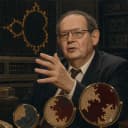
Mandelbrot coins the word fractal

Working at IBM, Benoit Mandelbrot formed the term from the Latin fractus, meaning broken or fragmented, and unified a family of irregular self-similar shapes.

No reliable place is given, so time continues without an invented pin

Continue through the world of this year
4
AD 1980Scene 4 / 4Continue through the world of this year

The Mandelbrot set — an icon of computer visualization

The simple iteration z ↦ z²+c generates a boundary of inexhaustible complexity, becoming a defining image of the computer-graphics era.

No reliable place is given, so time continues without an invented pin

Continue through the world of this year

Modern applications

Natural scenery in computer graphics, compact antenna design, communication-signal compression, and analysis of tumor boundaries in medical images.

Beyond MathVoyage

Curated sources and problems. Bring one discovery back from OEIS, Project Euler, MathOverflow, or arXiv.

No concept belongs to one person

Follow people who played different roles

These are not inventor credits. They are different ports: opening a problem, sharpening a language, or carrying it into another world.

Number lenses

A concept looks different when its world of numbers changes

These numbers are editorial lenses for the voyage, not required prerequisites.

Concept genealogy

What supports it, and what does it open?

Concepts arriving from before

Current port

Fractal

Concepts opened from here

No direct successor port is curated yet.

Only direct editorial links are shown; this is not a complete learning order or historical influence line.