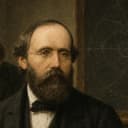
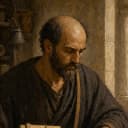
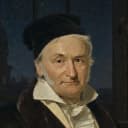
1829 CEFrom the ancient Greek postulate through Islamicate and European proof attempts to 19th-century public systems in Kazan and Transylvania, alongside Gauss's private investigations
This voyage is an editorial path for understanding, not a claim of direct historical influence or sole invention.
Understand it in one breath
"Euclid's fifth postulate — that parallel lines never meet — may simply be wrong." Discovered independently in the 19th century by Gauss, Lobachevsky, and Bolyai. Sixty years later it became real physics when general relativity revealed that the universe itself is curved. On a sphere (positive curvature), triangle angles sum to more than 180°.
At a glance
Space
Curvature
Sum of a triangle’s angles
Parallel lines through a point
Physical model
Euclidean (flat)
0
= 180°
Exactly 1
A desktop
Spherical (elliptic)
+
> 180°
0 (all lines meet)
Earth’s surface
Hyperbolic (Lobachevskian)
−
< 180°
Infinitely many
A saddle shape
The curvature of the universe as a whole is close to zero, yet space is locally curved near massive objects according to general relativity.
Concept
Centuries of failed attempts to prove Euclid's fifth postulate revealed that changing it can produce consistent alternative geometries, opening hyperbolic, elliptic, and more general curved spaces.
Key formula
α+β+γ=π(curved space)
Ports in time
This concept was not invented in one instant
Follow the scenes to see problems, notation, standards of proof, and applications changing across different times and places.
1
BC 300Scene 1 / 6Continue through the world of this year
Euclid’s fifth postulate
The original postulate says that two lines meet on the side where a transversal makes interior angles totaling less than two right angles. “Exactly one parallel through an external point” is Playfair’s later equivalent form.
No reliable place is given, so time continues without an invented pin
AD 1077Scene 2 / 6Continue through the world of this year
Khayyam — alternatives inside a proof attempt
Khayyam analyzed a quadrilateral with two perpendicular sides in an effort to rebuild the fifth postulate from a more evident assumption. This exposed the role of competing assumptions without yet producing a complete hyperbolic geometry.
No reliable place is given, so time continues without an invented pin
AD 1829Scene 3 / 6Continue through the world of this year
Lobachevsky and Bolyai — independent public systems
Lobachevsky published his geometry in Kazan in 1829–1830, and Bolyai published an independent treatment in Transylvania in 1832. Gauss’s related investigations remained chiefly in private notes and correspondence.
No reliable place is given, so time continues without an invented pin
AD 1854Scene 4 / 6Continue through the world of this year
Riemann — rethinking dimension, metric, and curvature
Riemann’s Göttingen lecture proposed a general framework in which the rule for measuring length and the curvature of space can vary. The lecture was delivered in 1854 and published posthumously in 1868.
No reliable place is given, so time continues without an invented pin
AD 1868Scene 5 / 6Continue through the world of this year
Beltrami — models and relative consistency
Beltrami interpreted hyperbolic geometry through models built within Euclidean mathematics, opening the route to a relative result: if the Euclidean framework is consistent, so is the modeled geometry.
No reliable place is given, so time continues without an invented pin
AD 1915Scene 6 / 6Continue through the world of this year
Einstein — spacetime geometry and gravitation
General relativity connects matter and energy with the curvature of pseudo-Riemannian spacetime. It did not prove that every non-Euclidean space is physically real or settle the universe’s global shape once and for all.
No reliable place is given, so time continues without an invented pin
Pseudo-Riemannian spacetime in general relativity, spatial-curvature models in cosmology, geodesy on curved surfaces, and hyperbolic embeddings for hierarchical data and networks. GPS applies special- and general-relativistic timing corrections; it is not powered by one “hyperbolic geometry device.”
Beyond MathVoyage
Curated sources and problems. Bring one discovery back from OEIS, Project Euler, MathOverflow, or arXiv.