Concept
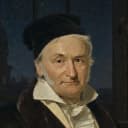
The prime-counting function π(x) is asymptotic to x/ln(x). Gauss recalled an early table-based observation in an 1849 letter; Hadamard and de la Vallée Poussin proved the theorem independently in 1896.
Understand it in one breath
"The number of primes up to N is roughly N / ln N." Proved independently in 1896 by Hadamard and de la Vallée-Poussin via complex analysis. Primes look irregular locally yet obey a striking average distribution. The Riemann Hypothesis would give a far sharper, near square-root-scale error bound; it would not list individual primes.
Change N and watch prime density emerge — π(N) sandbox
Compare exact π(N), Gauss’s first guess x/ln(x), and the refined Li(x). The Prime Number Theorem describes their large-scale asymptotic relationship, not monotonic improvement at every N. Try values up to 5,000,000.
Log-log axes. The Prime Number Theorem says π(x)/(x/ln x) approaches 1 over large scales; local gaps can still wobble instead of shrinking monotonically.
At a glance
Key formula
Key moments
Gauss’s letter to Encke — recalling an early density law
Gauss recalled that in his early years he had read prime tables as suggesting average density 1/ln(x), with Li(x) as a better approximation. The retrospective account does not establish one exact age-fifteen discovery date.
Riemann — the zeros hold the key
In a short Berlin Academy paper, Riemann connected fluctuations in prime counting with zeros of the zeta function. The resulting hypothesis would sharpen the error term, but is not required for the prime number theorem.
Hadamard and de la Vallée Poussin prove it independently
The two mathematicians independently proved the prime number theorem, joining number theory with complex analysis.
Erdős and Selberg — an elementary proof
Their work showed that the theorem could be proved without complex analysis. “Elementary” describes the tools rather than the difficulty; the episode also involved a dispute over priority and attribution.
Modern applications
Analysis of how often algorithms should encounter large prime candidates, distribution theory, and the benchmark behind sharper questions such as the Riemann hypothesis. It does not by itself guarantee cryptographic security.
Beyond MathVoyage
Loading…