This voyage is an editorial path for understanding, not a claim of direct historical influence or sole invention.
Understand it in one breath
Numbers greater than one divisible only by 1 and themselves — 2, 3, 5, 7, 11, 13, … The multiplicative atoms of the integers. RSA relies on the apparent classical difficulty of factoring large composites, while internet security combines many cryptographic methods, protocols, and implementations.
At a glance
The first 25 prime numbers
2, 3, 5, 7, 11
13, 17, 19, 23, 29
31, 37, 41, 43, 47
53, 59, 61, 67, 71
73, 79, 83, 89, 97
The atoms of the integers, easily found with the Sieve of Eratosthenes.
Concept
Integers greater than 1 divisible only by 1 and themselves — the multiplicative atoms of whole numbers. Euclid proved there are infinitely many; primes also support several, but not all, modern cryptographic systems.
Key formula
p∈P⟺p>1∧(∀d∣p,d=1∨d=p)
Worked examples
1
Q.Is 6 prime?
2
Q.Is 13 prime?
Ports in time
This concept was not invented in one instant
Follow the scenes to see problems, notation, standards of proof, and applications changing across different times and places.
1
BC 300Scene 1 / 4Continue through the world of this year
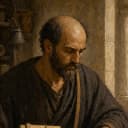
Euclid proves there are infinitely many primes
Book IX of the Elements gives an elegant contradiction proof that primes never run out — one of the earliest landmarks of pure mathematics.
No reliable place is given, so time continues without an invented pin
A procedure traditionally attributed to Eratosthenes crosses out successive multiples to leave primes. Later evidence preserves the attribution, not an exact ancient implementation identical to modern code.
RSA and several other constructions use arithmetic built from large primes or finite fields. Internet security also depends on elliptic curves, symmetric ciphers, hashes, protocols, implementations, and key management; primes are important, not the whole system.
Beyond MathVoyage
Curated sources and problems. Bring one discovery back from OEIS, Project Euler, MathOverflow, or arXiv.