Analysis · Concept hubDeep story

Probability

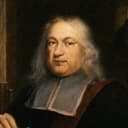
1654 CE17th-century France (Pascal–Fermat correspondence)

Concept

The mathematics of chance — from 17th-century gambling to modern AI.

Understand it in one breath

Assign uncertain events values between 0 and 1 in a consistent way. Traditions from games of chance, insurance, and statistics culminated in Kolmogorov's 1933 measure-theoretic axioms. Probability supports many models in statistics, finance, learning, and physics, but assumptions and model choice still need scrutiny, and quantum probability uses structures beyond a classical event space.

At a glance

05101520

Key formula

P:F[0,1],    P(Ω)=1,    P ⁣(Ai)=P(Ai)P: \mathcal{F} \to [0,1],\;\; P(\Omega) = 1,\;\; P\!\left(\bigcup A_i\right) = \sum P(A_i)

Worked examples

  1. 1

    Q.Probability that two dice sum to 7

  2. 2

    Q.Exactly 7 heads in 10 fair coin tosses

Key moments

1654 CE

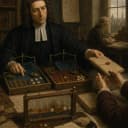
The Pascal–Fermat correspondence

A gambling problem posed by the Chevalier de Méré led Pascal and Fermat to exchange letters that established fundamental ideas of probability and expected value.

1713 CE

Bernoulli’s law of large numbers

Published posthumously in Ars Conjectandi, Jakob Bernoulli’s theorem showed that observed frequencies approach the underlying probability as trials accumulate.

1812 CE

Laplace’s synthesis

In Théorie analytique des probabilités, Laplace unified probability methods across astronomy, statistics, and measurement error, calling probability common sense reduced to calculation.

1933 CE

Kolmogorov’s axioms

Kolmogorov placed probability on measure-theoretic foundations with a compact system of axioms, establishing the modern mathematical framework.

Modern applications

Clinical-trial significance, insurance pricing, Bayesian AI, probability amplitudes in quantum mechanics, and weather forecasts — any task that quantifies uncertainty.

Beyond MathVoyage

Loading…