
L. E. J. Brouwer

L. E. J. Brouwer

AD 1881 - AD 1966
Born in Overschie
Active in Amsterdam
Modern Era

Life

In his 1907 Amsterdam doctoral thesis On the Foundations of Mathematics, 26-year-old Brouwer laid foundations for intuitionism. He rejected unrestricted use of excluded middle over infinite domains and demanded explicit construction for mathematical existence. His early topology used classical, non-constructive methods, which he later reassessed from his mature intuitionist standpoint. The 1911 fixed-point theorem — every continuous f: D^n → D^n has some x with f(x)=x — is a central result of classical topology. Brouwer opposed Hilbert's formalism in the 1920s Grundlagenstreit, and the Mathematische Annalen editorial conflict marked an institutional and academic climax of that dispute. Intuitionism later influenced constructive analysis, type theory, and proof-assistant research.

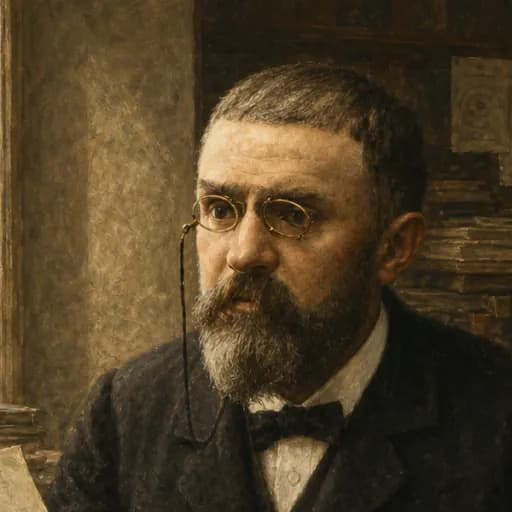
In one line
A mathematical object that cannot be explicitly constructed cannot be said to exist.

Decisive moments

AD 1907

Doctoral thesis — the proclamation of intuitionism

Amsterdam

Over de Grondslagen der Wiskunde — Amsterdam, under D. J. Korteweg. It laid foundations for intuitionism, treating mathematical objects as mental constructions and rejecting the unrestricted use of excluded middle, especially for general statements about infinite domains. This position differed from formalism and logicism.

AD 1911

Brouwer's fixed-point theorem — a giant of topology

Amsterdam

Every continuous f: D^n → D^n has some x with f(x) = x. This classical, non-constructive result from Brouwer's early topology later led to Kakutani's extension, Nash equilibrium, and other applications.

AD 1929

Expulsion from the Mathematische Annalen board — conflict in the Grundlagenstreit

Amsterdam

In 1928-1929 Brouwer's conflict with Hilbert led to his expulsion from the board of Mathematische Annalen. The episode was part of the academic and institutional conflict between formalism and intuitionism in the Grundlagenstreit. Heyting later systematized intuitionistic logic.

If this person hadn't existed

This is a thought experiment about influence, not a verified historical fact.

Brouwer's intuitionism articulated a constructivist foundational position distinct from formalism and logicism. Its demand for explicit construction became an important background for Bishop's constructive analysis, Martin-Löf type theory, and proof-assistant research in systems such as Coq and Lean. His 1911 fixed-point theorem also led to major applications in areas including game theory and economics.

Influence network

Influenced by

Beyond MathVoyage

Loading…