01234567891011
Number theory · Concept hubDeep story

Modular Arithmetic

1801 CE19th-century Germany (Gauss)

Through Modular Arithmetic: How can we find hidden order without counting everything?

Trace recurring structure through exploding possibilities, divisibility, and the apparent irregularity of primes.

This voyage is an editorial path for understanding, not a claim of direct historical influence or sole invention.

Understand it in one breath

Integers belong to the same class when they leave the same remainder modulo n. This appears naturally in clocks, calendars, checksums, and number theory; Gauss systematized congruence notation and theory in 1801. RSA and Diffie–Hellman use modular arithmetic centrally, while hashes, error correction, and internet security also require other algebra and protocols.

At a glance

×

0

1

2

3

4

5

6

0

0000000

1

0123456

2

0246135

3

0362514

4

0415263

5

0531642

6

0654321

Multiplication table mod 7 — every nonzero row contains exactly one 1, a consequence of 7 being prime.

Concept

The arithmetic of clocks — wrapping around at a modulus. The basic language of number theory and cryptography.

Key formula

ab(modn)    n(ab)a \equiv b \pmod{n} \iff n \mid (a - b)

Worked examples

  1. 1

    Q.7 o’clock + 8 hours = ?

  2. 2

    Q.3 × 5 (mod 7)

Ports in time

This concept was not invented in one instant

Follow the scenes to see problems, notation, standards of proof, and applications changing across different times and places.

1
BC 300Scene 1 / 4Continue through the world of this year

Euclid’s Elements — a precursor to congruence

Euclid already used the greatest-common-divisor algorithm. The tools of modular arithmetic existed long before its formal notation.

No reliable place is given, so time continues without an invented pin

Continue through the world of this year
2
AD 1801Scene 2 / 4Continue through the world of this year

Gauss — Disquisitiones Arithmeticae

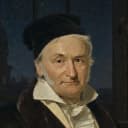
At age 24, Gauss introduced congruence notation (≡) and organized modular arithmetic into a general theory, transforming number theory.

No reliable place is given, so time continues without an invented pin

Continue through the world of this year
3
AD 1640Scene 3 / 4Continue through the world of this year

Fermat’s little theorem

The congruence a^p ≡ a (mod p) for prime p became a core tool of public-key cryptography more than three centuries later.

No reliable place is given, so time continues without an invented pin

Continue through the world of this year
4
AD 1977Scene 4 / 4Continue through the world of this year

RSA — modular arithmetic secures the network

Ron Rivest, Adi Shamir, and Leonard Adleman built public-key encryption from modular exponentiation and the difficulty of factoring a product of large primes.

No reliable place is given, so time continues without an invented pin

Continue through the world of this year

Modern applications

RSA, Diffie–Hellman, and elliptic-curve cryptography; hash functions; checksums; and twelve-tone music theory.

Beyond MathVoyage

Curated sources and problems. Bring one discovery back from OEIS, Project Euler, MathOverflow, or arXiv.

No concept belongs to one person

Follow people who played different roles

These are not inventor credits. They are different ports: opening a problem, sharpening a language, or carrying it into another world.

Number lenses

A concept looks different when its world of numbers changes

These numbers are editorial lenses for the voyage, not required prerequisites.

Concept genealogy

What supports it, and what does it open?

Only direct editorial links are shown; this is not a complete learning order or historical influence line.