Central anchor8/16
Diophantine Equations
Through Diophantine Equations: How can we find hidden order without counting everything?
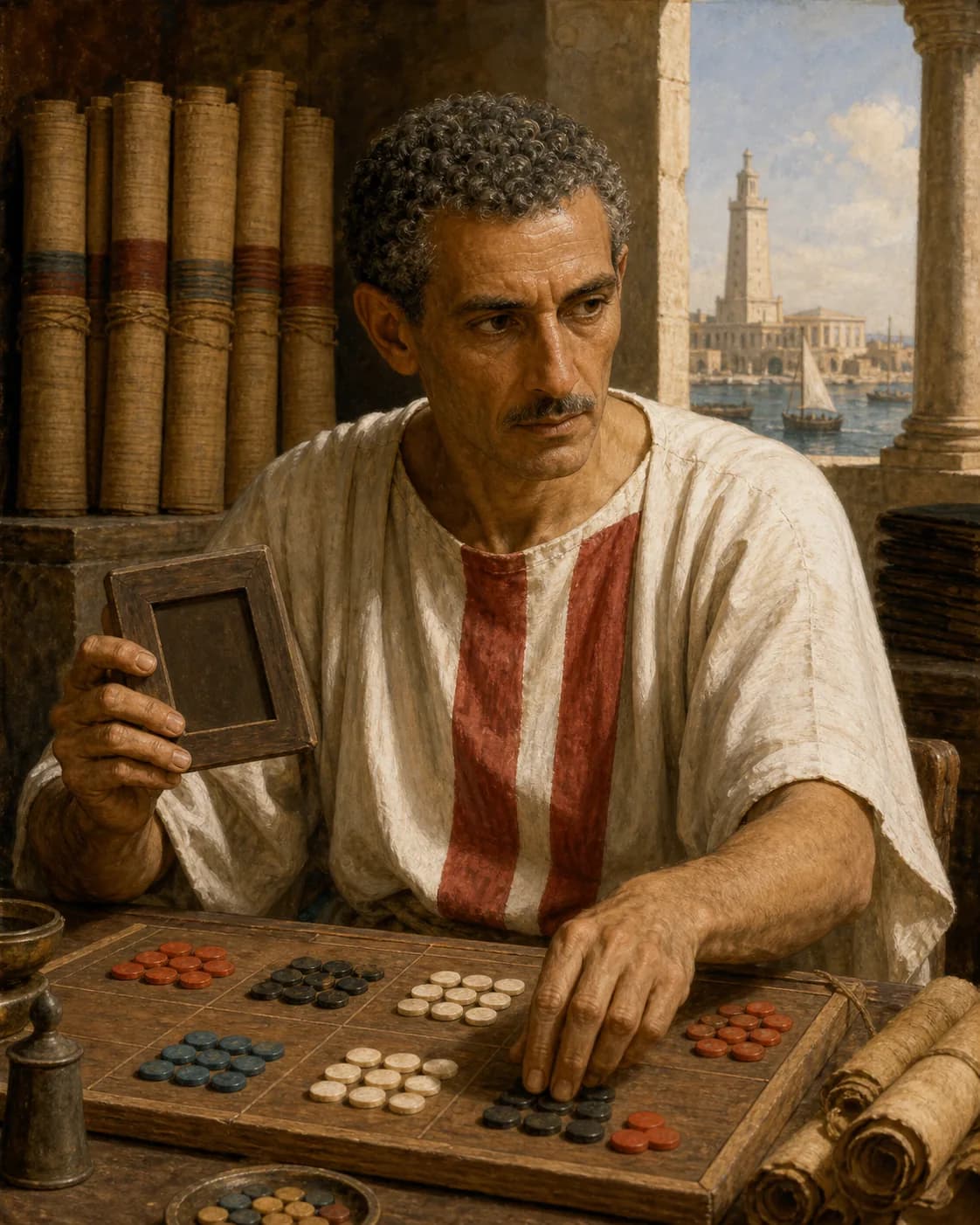
A life in shadow, but a clear voice arranging problems
Diophantus's dates and lifetime appearance are not securely known, and no reliable portrait tradition was found. The short curls, moustache, and red-striped tunic are an explicit invention evoking Roman Egypt, not a recovered face. The scrolls are editorial transmission layers rather than an actual shelf, and neither Fermat's margin nor the age-84 story is staged as a historical record.
MathVoyage editorial direction · OpenAI image generation · explicitly invented face · no verified likeness or stable portrait tradition · 2026-08-07
Remember the mind, not only the dates
The idea to carry forward
Glimpsing general structure through problems that seek particular numbers.Enter through one scene
The surviving Greek books collect numerical solutions of determinate and indeterminate equations. The traditional thirteen-book total and the status of four Arabic books belong to a transmission history that still includes scholarly debate.
Questions this person helps open
These are reverse projections of existing editorial routes, not claims of direct influence or sole invention.
Through Diophantine Equations: How can we find hidden order without counting everything?
PROFILE 02 · DEEP VOYAGE
Instead of memorizing more dates, follow the world that shaped this mind, the scenes that changed its direction, and the questions carried onward.
CHAPTER 01 · PERSON AND PERIOD
Before the finished achievement, read what this person treated as a problem and where the surviving evidence reaches its limit.
An ancient author whose life is almost unknown but whose problem-solving voice remains vivid. The usual third-century dates are inferred rather than documented. The Arithmetica collects equations seeking particular rational solutions and uses abbreviations for the unknown and its powers, an important step from rhetorical toward symbolic algebra. Six Greek books survive. An Arabic manuscript found in Mashhad in 1968 identifies itself as four books translated by Qusta ibn Luqa, though scholars debate whether they are lost books of Diophantus or part of a commentary tradition. The puzzle yielding an age of 84 comes from a much later Greek anthology, not a verified tomb inscription.
CHAPTER 02 · TURNING SCENES
Follow the moments when the idea moved one step further. Every scene continues through an evidenced place or an honestly labelled time context.
Scene 1 / 3
The surviving Greek books collect numerical solutions of determinate and indeterminate equations. The traditional thirteen-book total and the status of four Arabic books belong to a transmission history that still includes scholarly debate.
Scene 2 / 3
He abbreviated an unknown and its powers, but lacked the flexible general coefficients and multiple variables of modern notation. Greek, Indian, Islamic, and European algebraic traditions should not be collapsed into one straight lineage.
Scene 3 / 3
Fermat’s original copy is lost; the claim is known through the 1670 posthumous edition prepared by his son. The two 1995 papers, including the repair with Richard Taylor, proved the theorem through a broad network of work on elliptic curves and modular forms.
THOUGHT EXPERIMENT · NOT A FACT CLAIM
This is a thought experiment about influence, not a verified historical fact.
Instead of a single straight line from Diophantus to Fermat and Wiles, trace how translation, commentary, and new editions generated new questions. Beginners find a rational solution; intermediate learners compare rational and integer constraints; advanced learners move to rational points on curves; experts enter modern Diophantine geometry.
STANDING ON SHOULDERS · EVIDENCED CONNECTIONS
We do not draw a line merely because two people shared an era. Only connections traced through works, problems, or teaching appear with an explanation and evidence.
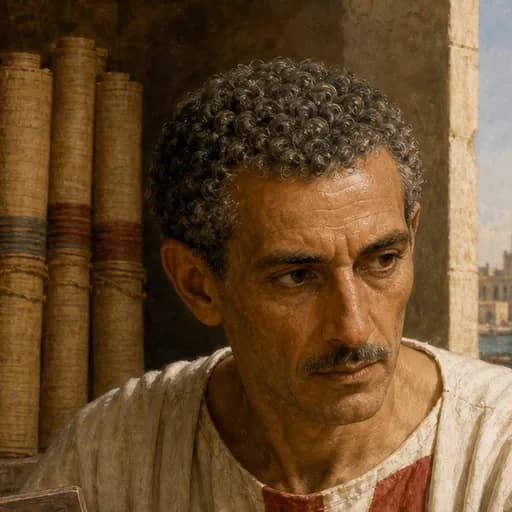
Diophantus of Alexandria
Greek Period
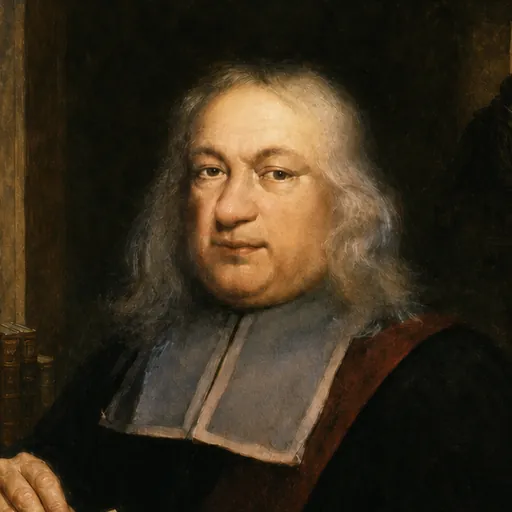
A 358-year journey begins in the margin of Arithmetica
While reading Diophantus’s Arithmetica, Fermat wrote his Last Theorem in the margin. An ancient study of integer solutions opened one of modern number theory’s longest problem lineages.
Evidence for this connectionCurated sources and problems. Bring one discovery back from OEIS, Project Euler, MathOverflow, or arXiv.