Central anchor7/18
Dynamical Systems
Through Dynamical Systems: How can instantaneous change and long accumulation become one language?
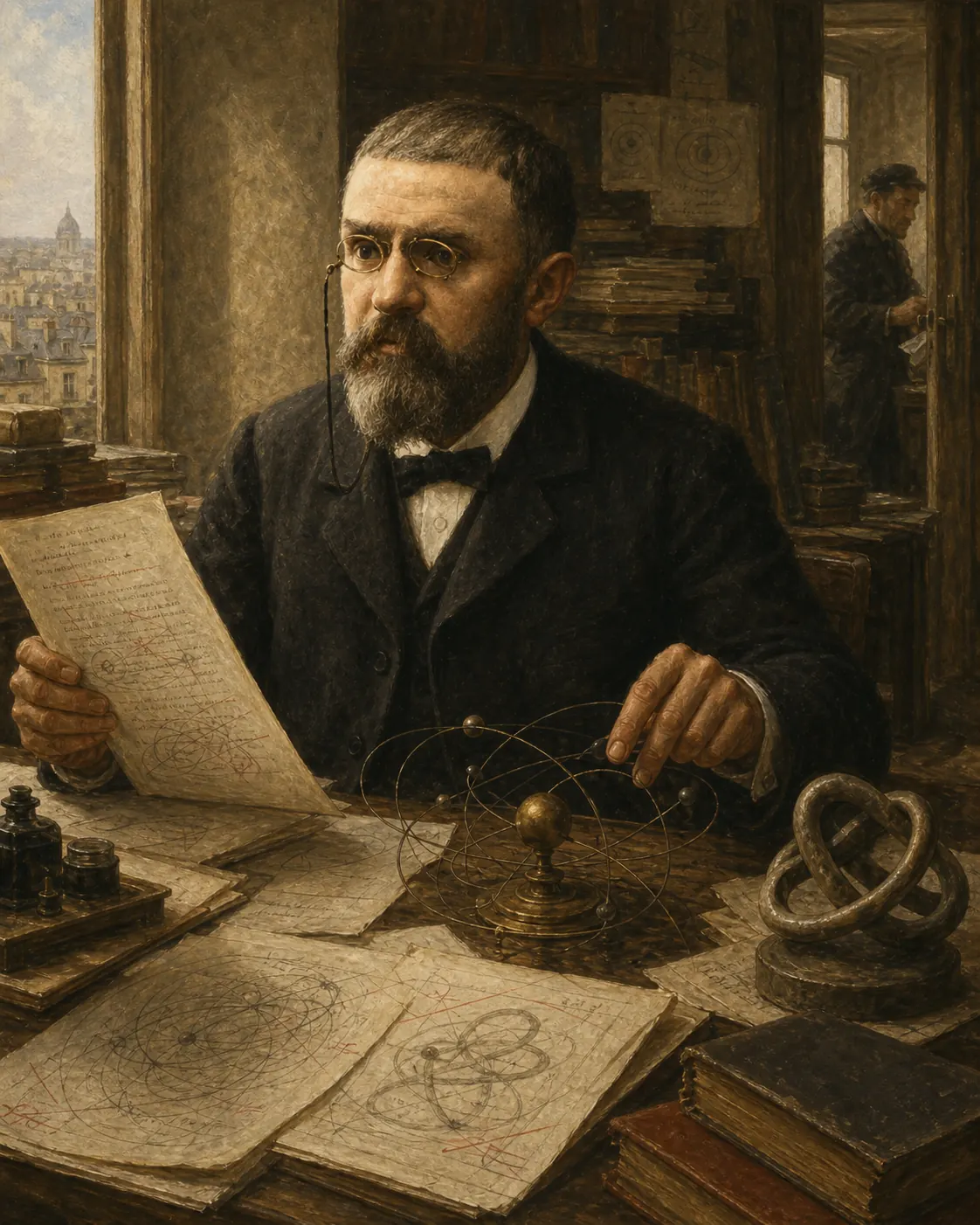
Correcting a mistaken orbit and seeing the structure of unpredictability
The face draws on surviving photographs of Poincaré, but this scene compresses the correction of his 1889 Oscar II prize memoir with later topological work. The revised memoir was not a general solution of the three-body problem, and the scene does not project today’s chaos plots or terminology back onto one moment of discovery.
MathVoyage editorial direction · OpenAI image generation · historical photograph reference · 2026-08-07
Remember the mind, not only the dates
The idea to carry forward
Mathematicians do not study objects, but the relations between objects.Enter through one scene
The Oscar II prize memoir did not produce a closed-form general solution. Correcting an error in the submitted version led him to complex intersections of trajectories and new methods for long-term dynamics.
Questions this person helps open
These are reverse projections of existing editorial routes, not claims of direct influence or sole invention.
Through Dynamical Systems: How can instantaneous change and long accumulation become one language?
Through Chaos Theory: How can instantaneous change and long accumulation become one language?
Through Topology: What survives when shapes change, and which rules divide one world from another?
Through Homology: What survives when shapes change, and which rules divide one world from another?
PROFILE 02 · DEEP VOYAGE
Instead of memorizing more dates, follow the world that shaped this mind, the scenes that changed its direction, and the questions carried onward.
CHAPTER 01 · PERSON AND PERIOD
Before the finished achievement, read what this person treated as a problem and where the surviving evidence reaches its limit.
A wide-ranging mathematician who connected differential equations, celestial mechanics, topology, mathematical physics, and philosophy. Corrections to his prize memoir on the three-body problem revealed complex orbit structure that later became central to dynamical systems.
CHAPTER 02 · TURNING SCENES
Follow the moments when the idea moved one step further. Every scene continues through an evidenced place or an honestly labelled time context.
Scene 1 / 3
The Oscar II prize memoir did not produce a closed-form general solution. Correcting an error in the submitted version led him to complex intersections of trajectories and new methods for long-term dynamics.
Scene 2 / 3
"Is every simply connected closed 3-manifold homeomorphic to the 3-sphere?" A million-dollar Millennium Problem — proved by Perelman in 2003.
Scene 3 / 3
Poincaré refined Lorentz’s electrodynamics and discussed the group structure of the transformations and a relativity principle. In the same year Einstein developed special relativity from a distinct physical starting point.
THOUGHT EXPERIMENT · NOT A FACT CLAIM
This is a thought experiment about influence, not a verified historical fact.
Instead of ending with the label “last universalist,” follow one habit across fields: ask whether local calculations control a whole orbit, whether different shapes share a connective structure, and what remains invariant when an observer changes.
STANDING ON SHOULDERS · EVIDENCED CONNECTIONS
We do not draw a line merely because two people shared an era. Only connections traced through works, problems, or teaching appear with an explanation and evidence.
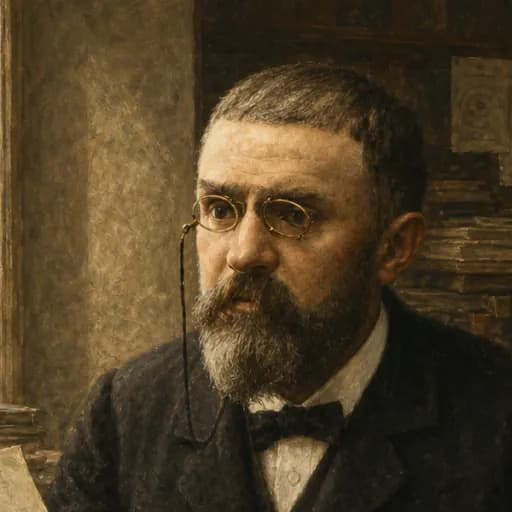
Henri Poincaré
Nineteenth-Century Mathematics
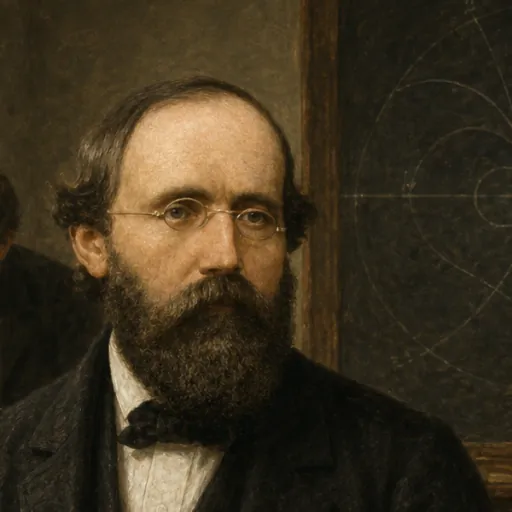
From Riemann surfaces to topology
Poincaré extended the relation between Riemann surfaces and complex functions toward higher-dimensional manifolds and topological invariants, helping found algebraic topology.
Evidence for this connection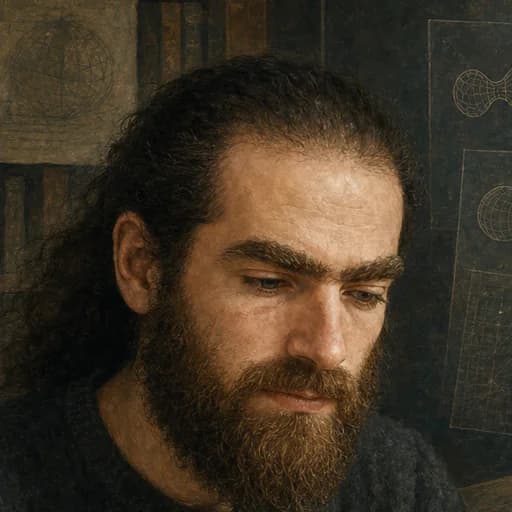
A century-old conjecture meets Ricci flow
Poincaré’s 1904 recognition problem for the three-sphere was solved a century later when Perelman used Ricci flow with surgery.
Evidence for this connection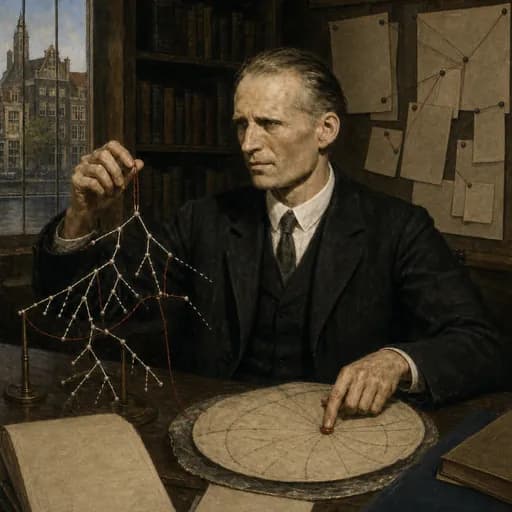
From intuitive topology to invariance and fixed points
Brouwer rigorized the topology begun by Poincaré, proving invariance of dimension and the fixed-point theorem that bears his name.
Evidence for this connectionCurated sources and problems. Bring one discovery back from OEIS, Project Euler, MathOverflow, or arXiv.