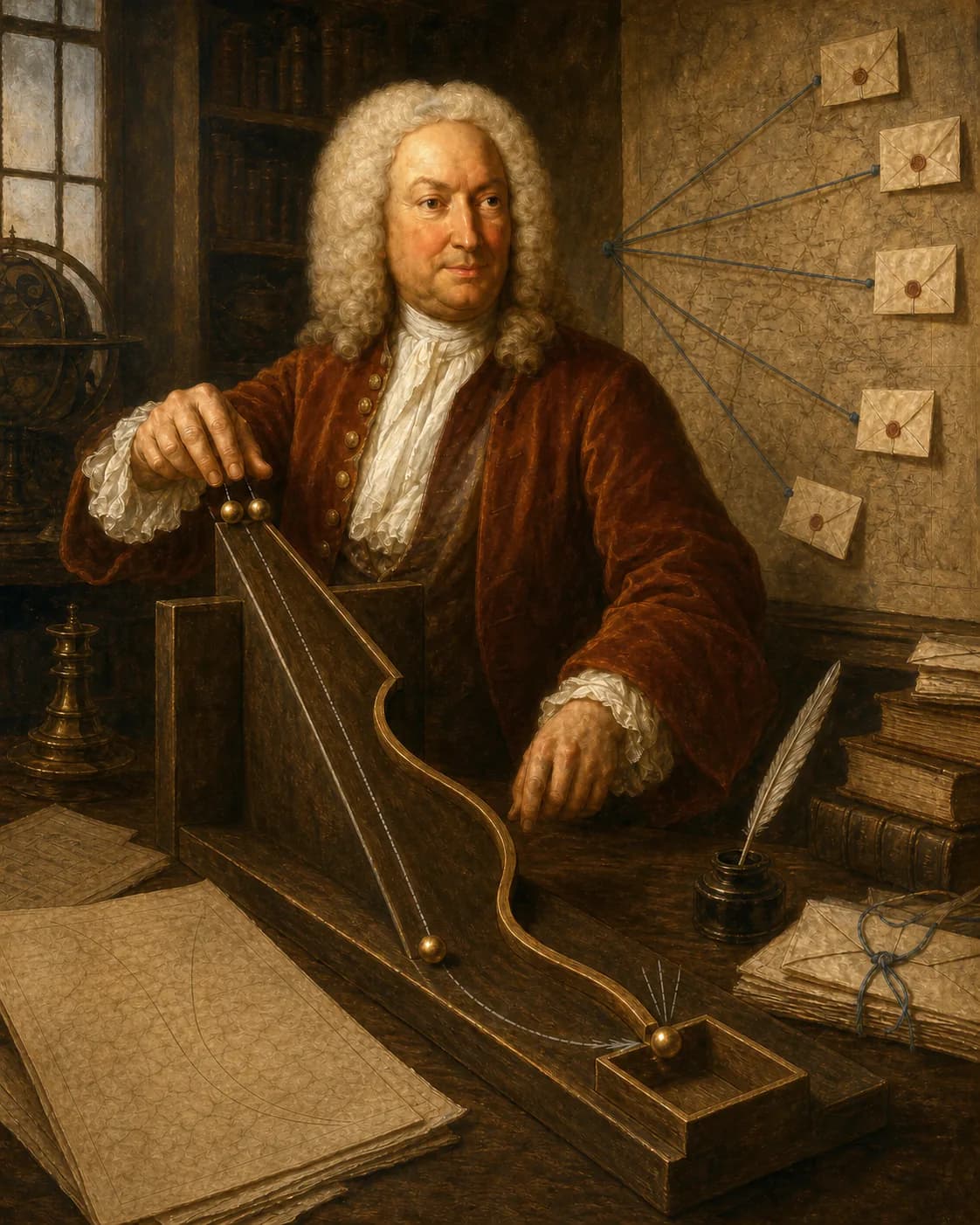
A likeness-informed AI editorial scene of Johann Bernoulli testing a curved track that beats the straight path beside a five-way correspondence network
AI editorial interpretation

The shortest route was not the fastest route

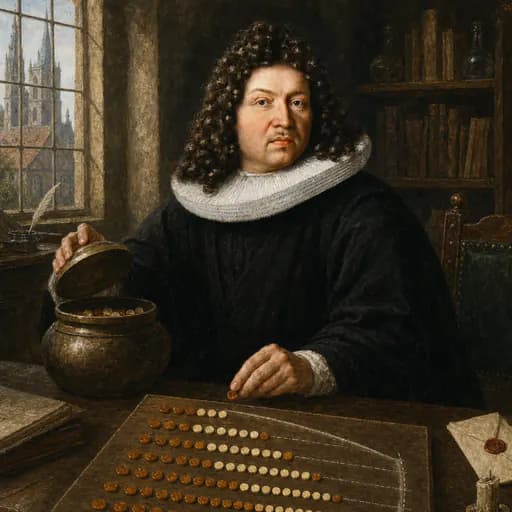
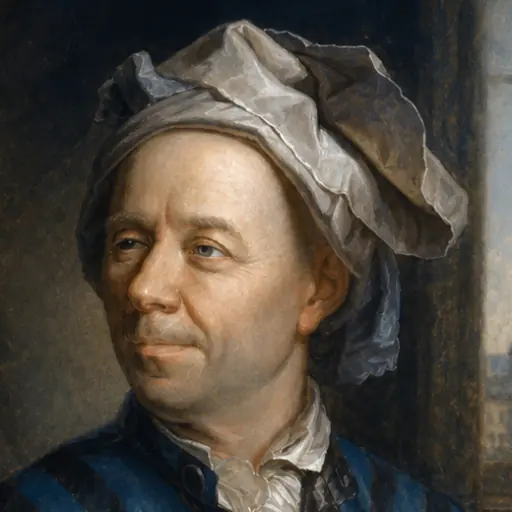
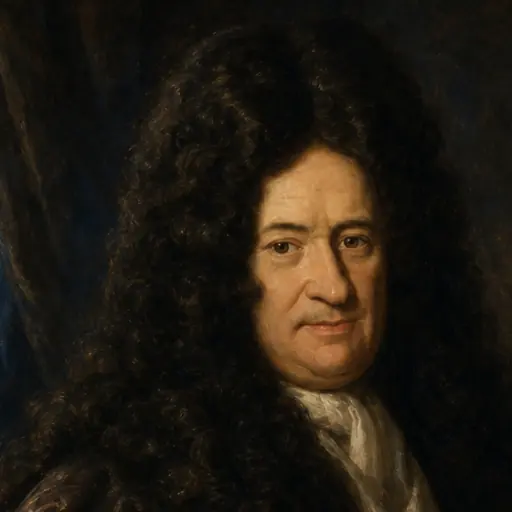
The face uses the established Johann Bernoulli portrait tradition. The scene compresses his 1696 Groningen brachistochrone challenge with Leipzig print and European correspondence; it is not a photograph of an experiment or a universal result including friction. The responses of Jakob, Newton, Leibniz, and l'Hôpital are not absorbed into one person's achievement.

MathVoyage editorial direction · OpenAI image generation · historical portrait identity reference · precise generated-text removal edit · 2026-08-07

Remember the mind, not only the dates

Johann Bernoulli

AD 1667 - AD 1748
Thinking ground · Basel
EnlightenmentA curved route faster than the straight oneA challenge calling Europe through lettersTeaching that spread methods and notation

The idea to carry forward

The brachistochrone shows that the shortest path need not be the fastest path.

Enter through one scene

AD 1696

The brachistochrone challenge

He challenged Europe with what is the fastest sliding path between two points? The answer: a cycloid.

Questions this person helps open

Concept ports to revisit, not another achievement list

These are reverse projections of existing editorial routes, not claims of direct influence or sole invention.

No concept port has yet been reviewed for this person.

Browse every concept route

PROFILE 02 · DEEP VOYAGE

How Johann Bernoulli’s ideas moved

Instead of memorizing more dates, follow the world that shaped this mind, the scenes that changed its direction, and the questions carried onward.

CHAPTER 01 · PERSON AND PERIOD

What questions surrounded Johann Bernoulli?

Before the finished achievement, read what this person treated as a problem and where the surviving evidence reaches its limit.

About 1 min read

Younger brother of Jakob and teacher of Euler. His 1696 brachistochrone problem opened the calculus of variations. He warred with both his brother and his son Daniel — but his Saturday lessons in Basel discovered the young Euler, perhaps his greatest gift to mathematics.
CHAPTER 02 · TURNING SCENES

3 turning scenes

Follow the moments when the idea moved one step further. Every scene continues through an evidenced place or an honestly labelled time context.

  1. Scene 1 / 3

    AD 1696Basel

    The brachistochrone challenge

    He challenged Europe with what is the fastest sliding path between two points? The answer: a cycloid.

  2. Scene 2 / 3

    AD 1697Basel· Geographic context

    Several solutions published

    Newton sent an anonymous solution, while Jakob, Leibniz, and l'Hôpital also responded. The “one night” and “lion's claw” details are traditional anecdotes; the mathematical point is that several methods could now be compared.

  3. Scene 3 / 3

    AD 1720Basel· Geographic context

    Mentoring Euler

    He regularly guided the young Euler through difficult problems at Basel. Euler's independent talent and the Bernoulli educational network worked together.

THOUGHT EXPERIMENT · NOT A FACT CLAIM

Erase Johann Bernoulli from the map

This is a thought experiment about influence, not a verified historical fact.

Beginners can ask why a cycloid beats a straight line under gravity; intermediate learners set up the travel-time integral. Advanced learners derive the Euler–Lagrange equation, and experts connect the problem to optimal control and geodesics. The story that Bernoulli recognized Newton's anonymous solution “by the lion's claw,” including the exact timing, is best treated as a traditional anecdote.

STANDING ON SHOULDERS · EVIDENCED CONNECTIONS

What arrived here, and what moved onward?

We do not draw a line merely because two people shared an era. Only connections traced through works, problems, or teaching appear with an explanation and evidence.

Johann Bernoulli

Johann Bernoulli

Enlightenment

Received 2Passed on 1

What this person received

The most forceful carrier of Leibnizian calculus

Johann Bernoulli learned and developed the new calculus through correspondence with Leibniz. His problems, teaching, and students spread Leibnizian notation and methods across Europe.

Evidence for this connection
Jakob Bernoulli
CollaboratorsJakob Bernoulli

Two brothers grow the new calculus

Jakob and Johann strongly shaped one another’s early mathematical development before becoming fierce rivals. Their cooperation and disputes accelerated work in calculus and variational problems.

Evidence for this connection

What later generations carried onward

From Basel lessons to a master of analysis

Johann Bernoulli recognized the young Euler’s talent, tutored him privately, and helped persuade his family to let him pursue mathematics. This direct teaching became a central lineage of European analysis.

Evidence for this connection

Beyond MathVoyage

Curated sources and problems. Bring one discovery back from OEIS, Project Euler, MathOverflow, or arXiv.