Central anchor6/8
Incompleteness Theorems
Through Incompleteness Theorems: How far can mathematics control its own infinities, paradoxes, and limits of proof?
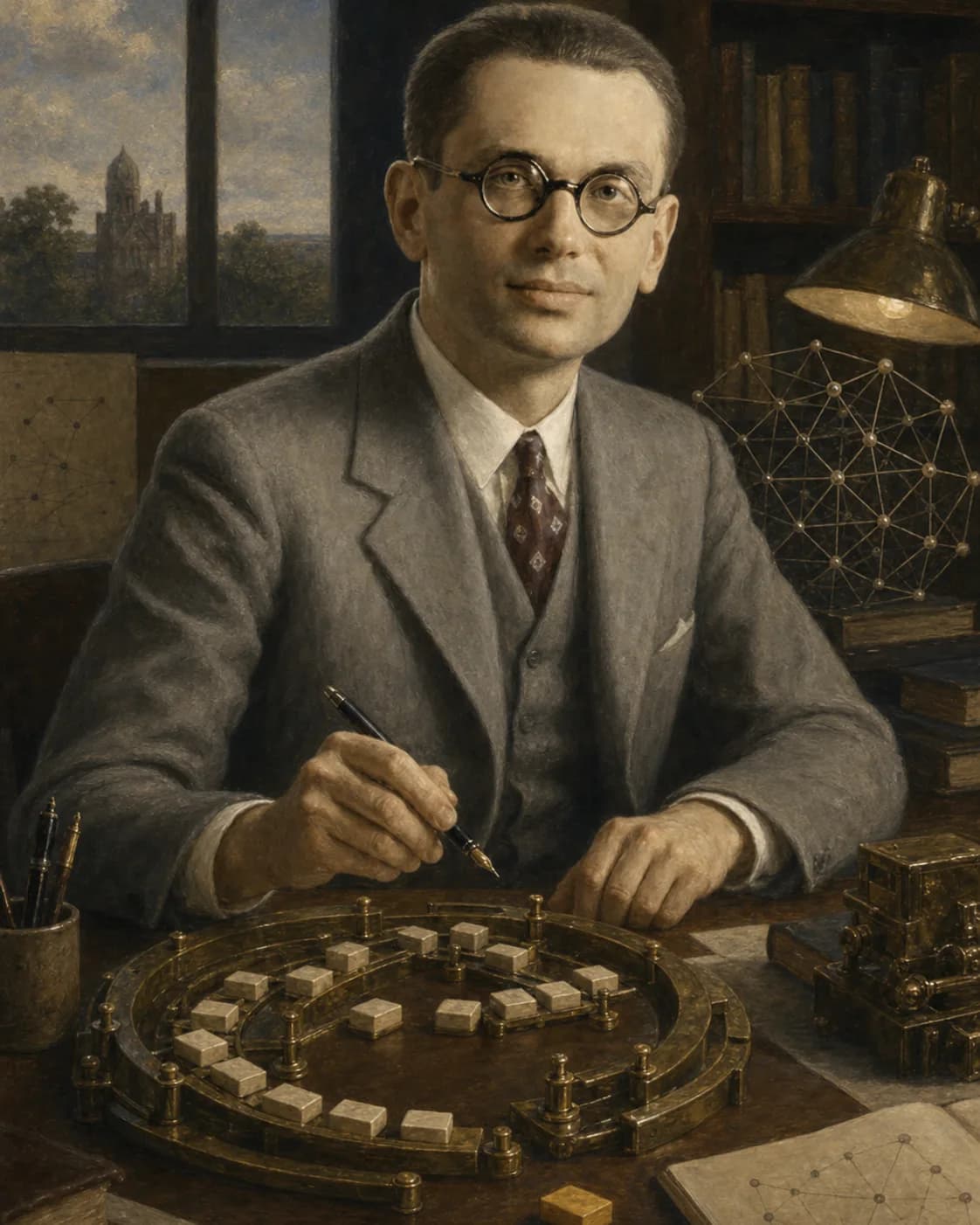
Between what a system can express and what it can prove from within
The face uses a surviving photograph. The room compresses the 1930–1931 incompleteness work with the later constructible universe; it is not a record of one Princeton study. Under their stated hypotheses the theorems concern particular formal systems, not that every truth is unprovable or mathematics inconsistent. Gödel's illness is not presented as the cause of the mathematics.
MathVoyage editorial direction · OpenAI image generation · historical photograph identity reference · 2026-08-07
Remember the mind, not only the dates
Enter through one scene
In a conference discussion on 7 September 1930, he informally announced the first incompleteness result. Von Neumann, in the audience, quickly grasped its importance.
Questions this person helps open
These are reverse projections of existing editorial routes, not claims of direct influence or sole invention.
Through Incompleteness Theorems: How far can mathematics control its own infinities, paradoxes, and limits of proof?
If a procedure is exact, will it eventually solve every question?
If all mathematics is built from collections, what becomes possible—and what breaks?
PROFILE 02 · DEEP VOYAGE
Instead of memorizing more dates, follow the world that shaped this mind, the scenes that changed its direction, and the questions carried onward.
CHAPTER 01 · PERSON AND PERIOD
Before the finished achievement, read what this person treated as a problem and where the surviving evidence reaches its limit.
A logician who established mathematical limits of formal systems. At age 24, Gödel informally announced his first incompleteness result in a Königsberg discussion on 7 September 1930; the paper stating both theorems appeared in January 1931. Under their stated assumptions, effectively axiomatized systems strong enough for arithmetic contain sentences they cannot decide and generally cannot prove their own consistency.
CHAPTER 02 · TURNING SCENES
Follow the moments when the idea moved one step further. Every scene continues through an evidenced place or an honestly labelled time context.
Scene 1 / 4
In a conference discussion on 7 September 1930, he informally announced the first incompleteness result. Von Neumann, in the audience, quickly grasped its importance.
Scene 2 / 4
Über formal unentscheidbare Sätze … I appeared in volume 38 of Monatshefte für Mathematik und Physik, pages 173–198, stating both incompleteness theorems.
Scene 3 / 4
Fleeing the Nazis through Japan and across the Pacific to the Institute for Advanced Study at Princeton, where he became Einstein's closest friend.
Scene 4 / 4
Preparing for the test, he discovered a logical loophole in the U.S. Constitution allowing dictatorship. Einstein barely stopped him from explaining it to the examiner.
CHAPTER 03 · IDEAS IN MOTION
A city is not scenery but a condition where people, texts, institutions, and tools could meet. Each pin marks an evidenced activity window, not an entire life.
Institute for Advanced Study in Princeton
CHAPTER 04 · TOOLS LEFT BEHIND
The useful question is not a star rating, but what remained available for solving another problem.
Showed that a consistent, effectively axiomatized system strong enough for arithmetic has sentences it cannot prove and, under the theorem's conditions, cannot prove its own consistency.
THOUGHT EXPERIMENT · NOT A FACT CLAIM
This is a thought experiment about influence, not a verified historical fact.
The incompleteness theorems exposed limits to the aims of Hilbert's program and helped frame later work on what can be decided mechanically. Gödel's formal methods are an important foundational link to Church and Turing's work on computability.
STANDING ON SHOULDERS · EVIDENCED CONNECTIONS
We do not draw a line merely because two people shared an era. Only connections traced through works, problems, or teaching appear with an explanation and evidence.
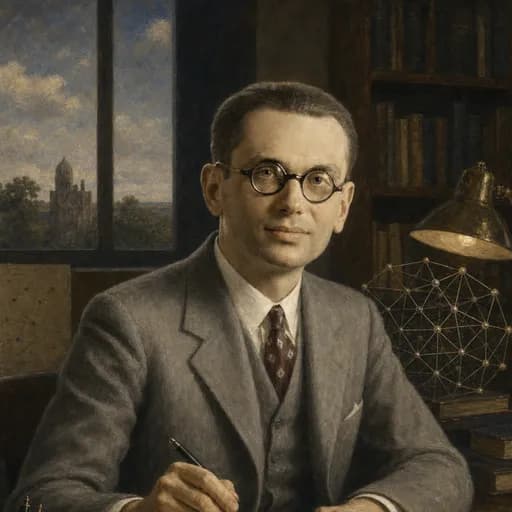
Kurt Gödel
Modern Era

Testing Principia’s system from within
Gödel’s incompleteness theorems showed that consistent, effectively axiomatized systems strong enough for arithmetic—including systems in the Principia tradition—cannot decide every sentence expressible within them.
Evidence for this connection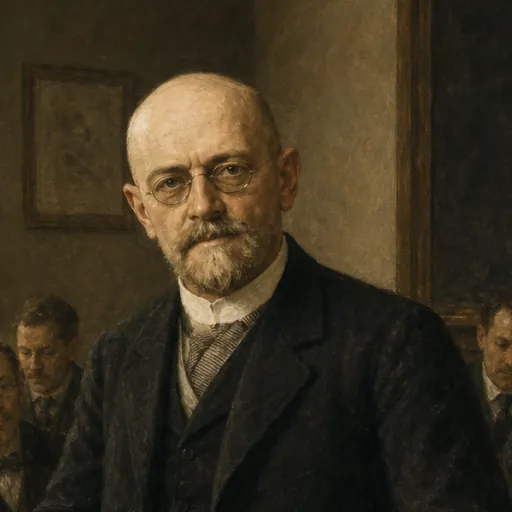
A dream of complete formalization reveals its limit
Hilbert’s program sought to formalize classical mathematics and justify its consistency by finitary methods. Gödel showed that sufficiently strong systems meeting the theorem’s conditions contain sentences unprovable within themselves, exposing limits to those aims.
Evidence for this connection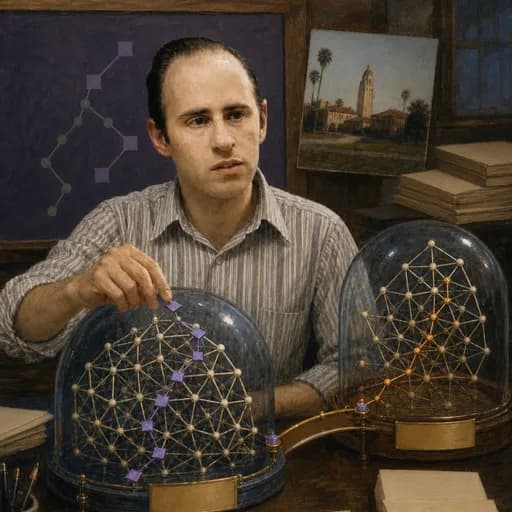
Completing both sides of continuum independence
After Gödel proved relative consistency of the continuum hypothesis, Cohen used forcing to prove relative consistency of its negation. Together the results established independence from ZFC.
Evidence for this connectionCurated sources and problems. Bring one discovery back from OEIS, Project Euler, MathOverflow, or arXiv.