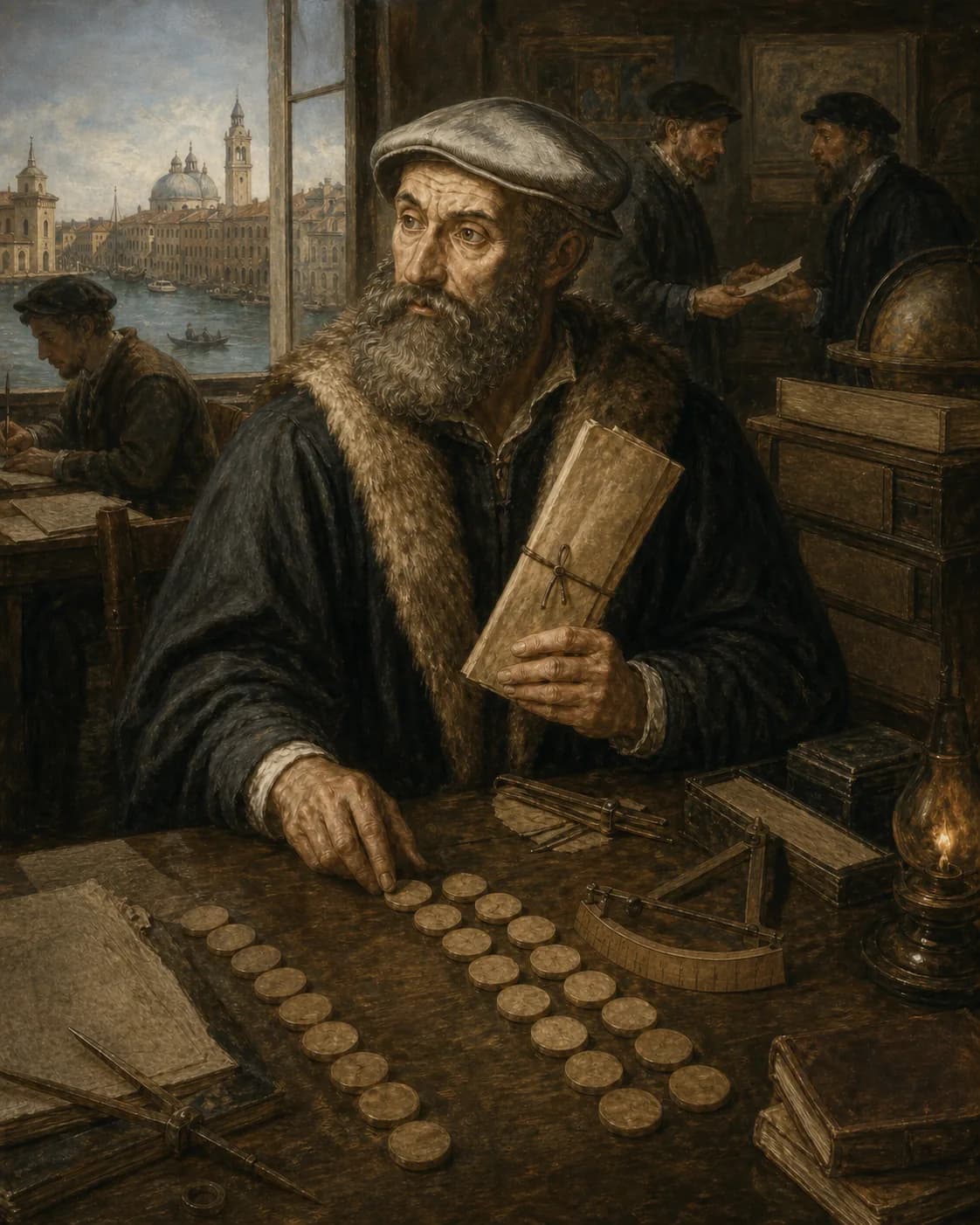
Niccolò Tartaglia

Niccolò Tartaglia

AD 1500 - AD 1557
Born in Brescia
Active in Venice
Renaissance

Life

A central figure in the Renaissance dispute where a method and a promise of secrecy collided. Tartaglia was wounded during the 1512 Sack of Brescia; details of the injury and resulting stammer come chiefly from his later autobiographical account. With little formal schooling, he became a teacher and mathematical author. A 1535 problem contest against Antonio Fior made his method for one class of cubic equations famous. In 1539 he gave Cardano a versified rule under a pledge of secrecy. After Cardano and Ferrari found evidence of del Ferro’s earlier work, Cardano published the method with attributions in the 1545 Ars Magna; Tartaglia regarded this as betrayal. The episode is more revealing as a conflict among priority, secrecy, and prior work than as a simple hero-and-plagiarist story.

In one line
One formula can have different histories of discovery, transmission, and publication.

Decisive moments

AD 1512

Wounded during the Sack of Brescia

Brescia

The account of wounds to his face and mouth during the sack rests on Tartaglia’s own later recollection. His adopted nickname was connected with the stammer that followed.

AD 1535

The cubic contest with Fior

He gained fame by solving Antonio Fior’s cubic problems with his method. Such contests reveal a culture in which mathematical methods could be guarded assets.

AD 1539

A versified rule shared with Cardano

He shared the rule in verse under a promise of secrecy. In 1545 Cardano published after finding del Ferro’s prior work and included attributions, but that did not settle the ethics of the promise.

If this person hadn't existed

This is a thought experiment about influence, not a verified historical fact.

Beginners test a solution to x³ = 8; intermediate learners follow the transformation of x³ + px = q. Advanced learners see why Cardano’s formula can pass through complex numbers on the way to a real answer. Experts separate the roles of Tartaglia, del Ferro, Cardano, and Ferrari and debate why mathematical validity and publication ethics are different questions.

Influence network

Beyond MathVoyage

Loading…