Central anchor3/18
Calculus
How can instantaneous speed and distance over time become the same calculation?
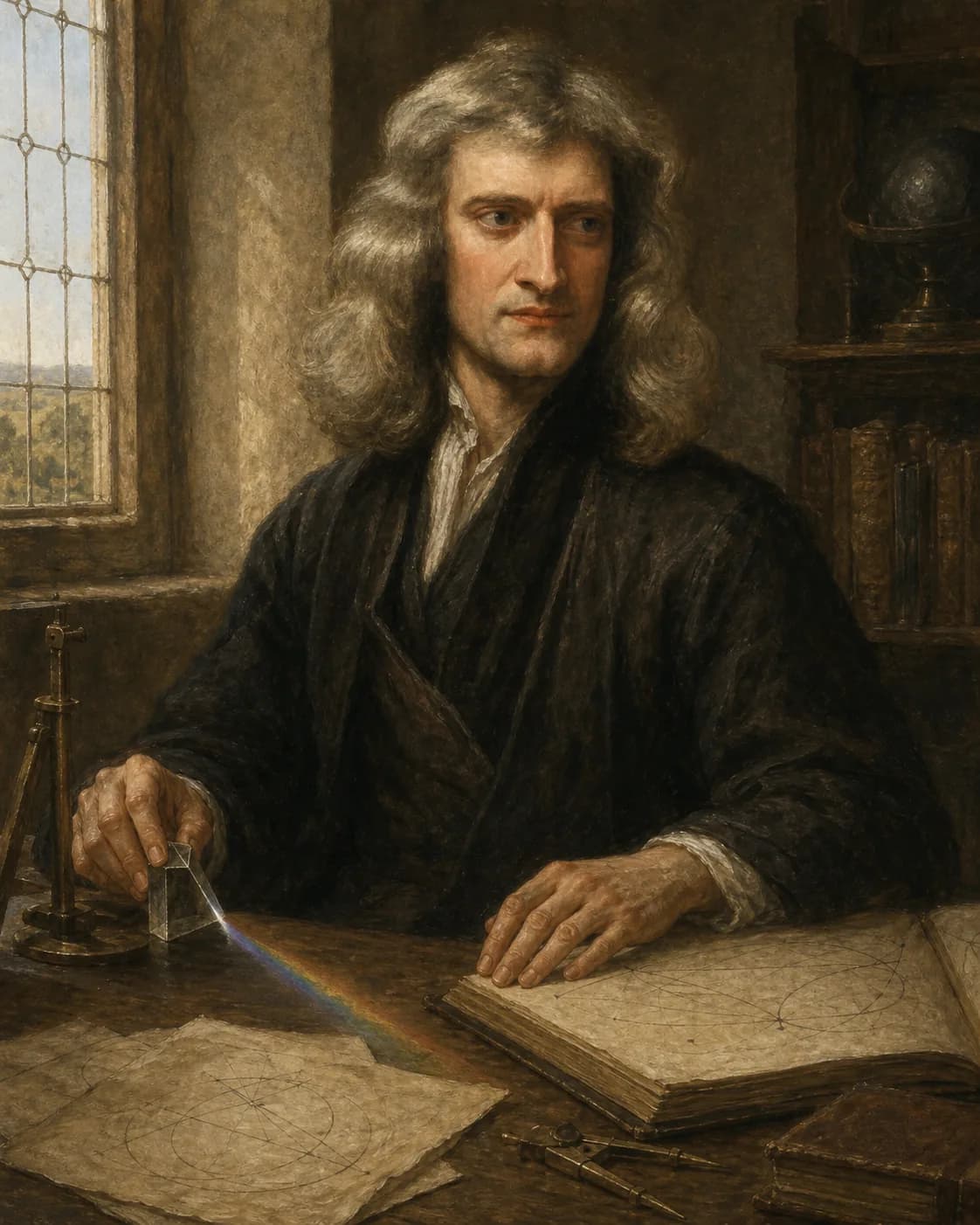
A period when light, change, and motion were still being connected at one worktable
The face draws on the familiar Newton portrait tradition, but this is not a record of a specific Woolsthorpe room or one miraculous moment in 1665–1666. His work on series, fluxions, light, and gravitation matured through predecessors and decades of later work.
MathVoyage editorial direction · OpenAI image generation · historical likeness reference · 2026-08-07
Remember the mind, not only the dates
The idea to carry forward
If I have seen further, it is by standing on the shoulders of giants.Enter through one scene
At Woolsthorpe he developed central early ideas on series, fluxions, prisms, and gravitation. The results were revised and published over many later years.
The fundamental calculus connection moves between two questions: how fast does an accumulated quantity change, and can finely gathered instantaneous rates recover the total change?
Accumulate the speed v(t)=2t in smaller time slices.
Double the number of time slices and watch left rectangles approach the true displacement 1.
Accumulated displacement
0.50000
Gap from true value 1
0.50000
This is a modern left-Riemann-sum toy for v(t)=2t on 0≤t≤1. It does not reproduce Newton’s fluxional notation, manuscripts, or geometric arguments.
Questions this person helps open
These are reverse projections of existing editorial routes, not claims of direct influence or sole invention.
How can instantaneous speed and distance over time become the same calculation?
Through Differential Equations: How can instantaneous change and long accumulation become one language?
PROFILE 02 · DEEP VOYAGE
Instead of memorizing more dates, follow the world that shaped this mind, the scenes that changed its direction, and the questions carried onward.
CHAPTER 01 · PERSON AND PERIOD
Before the finished achievement, read what this person treated as a problem and where the surviving evidence reaches its limit.
A central architect of calculus, optics, and mathematical mechanics. His plague-year work was foundational but matured through predecessors, later calculation, controversy, and the 1687 Principia.
CHAPTER 02 · TURNING SCENES
Follow the moments when the idea moved one step further. Every scene continues through an evidenced place or an honestly labelled time context.
Scene 1 / 3
At Woolsthorpe he developed central early ideas on series, fluxions, prisms, and gravitation. The results were revised and published over many later years.
Scene 2 / 3
Laws of motion and inverse-square gravitation derived Keplerian results and placed terrestrial and celestial phenomena in one mathematical program.
Scene 3 / 3
He became Warden and then Master in 1699, working intensively on recoinage and counterfeiting cases. Death sentences came from the legal system, not Newton acting as judge.
CHAPTER 03 · IDEAS IN MOTION
A city is not scenery but a condition where people, texts, institutions, and tools could meet. Each pin marks an evidenced activity window, not an entire life.
Professor at the University of Cambridge
CHAPTER 04 · TOOLS LEFT BEHIND
The useful question is not a star rating, but what remained available for solving another problem.
Established foundations for infinitesimal calculus.
THOUGHT EXPERIMENT · NOT A FACT CLAIM
This is a thought experiment about influence, not a verified historical fact.
Newton's distinctive achievement was synthesis: calculating terrestrial and celestial motion within shared principles. Leibnizian calculus and work by Hooke, Huygens, and others prevent the scientific revolution from depending on one mind.
STANDING ON SHOULDERS · EVIDENCED CONNECTIONS
We do not draw a line merely because two people shared an era. Only connections traced through works, problems, or teaching appear with an explanation and evidence.
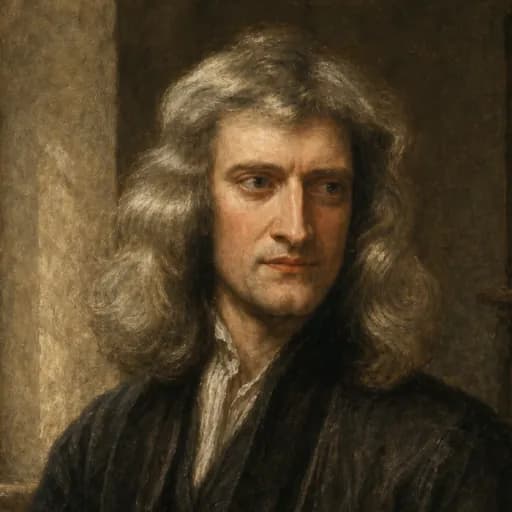
Isaac Newton
Enlightenment
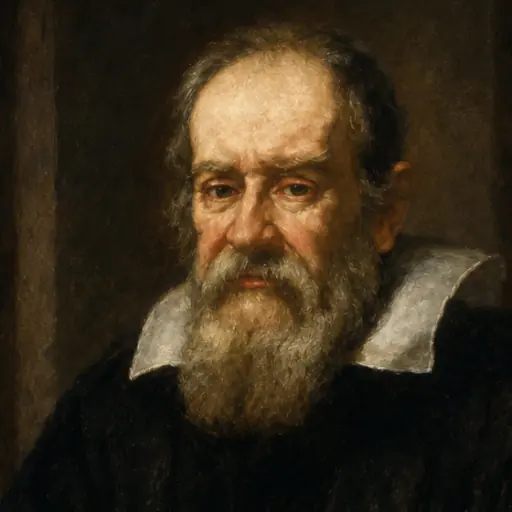
From falling bodies and inertia to laws of motion
Newton studied Galileo’s Copernican mechanics and work on motion, then extended that program by placing terrestrial and celestial motion under the same laws.
Evidence for this connection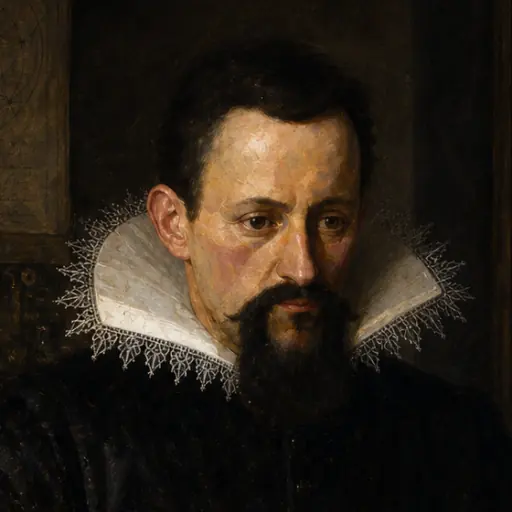
From planetary laws to inverse-square gravity
Newton combined Kepler’s third law with circular-motion dynamics to derive the inverse-square relation and explain Kepler’s orbital laws through universal gravitation.
Evidence for this connection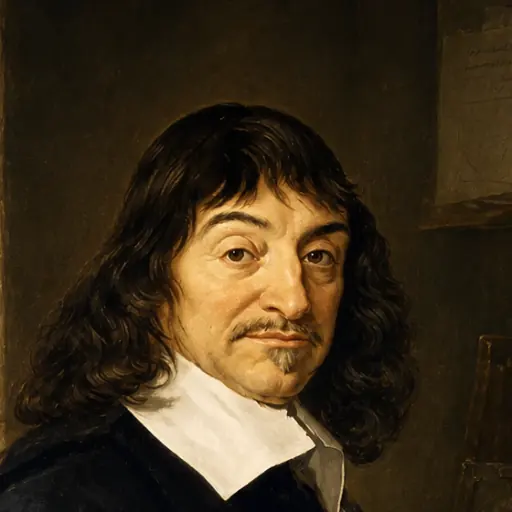
Coordinates and curves become the language of calculus
Newton studied Descartes’ philosophy and analytic geometry. Treating curves through algebraic expressions became essential language for his fluxions and infinite-series work.
Evidence for this connection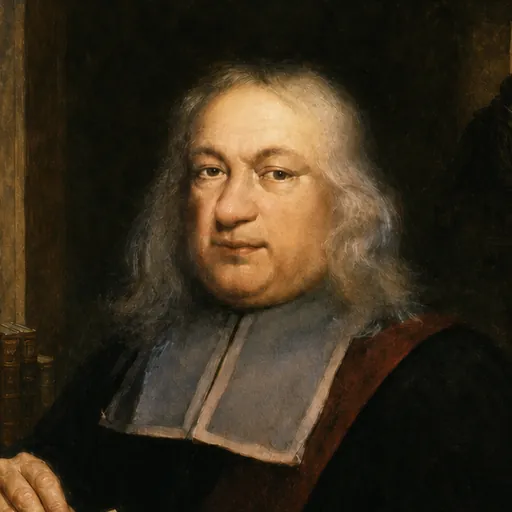
From tangents and extrema to fluxions
Fermat’s methods for tangents, maxima, and minima were powerful precursors for rates of change. Newton extended this problem family into a general calculus of motion and variation.
Evidence for this connection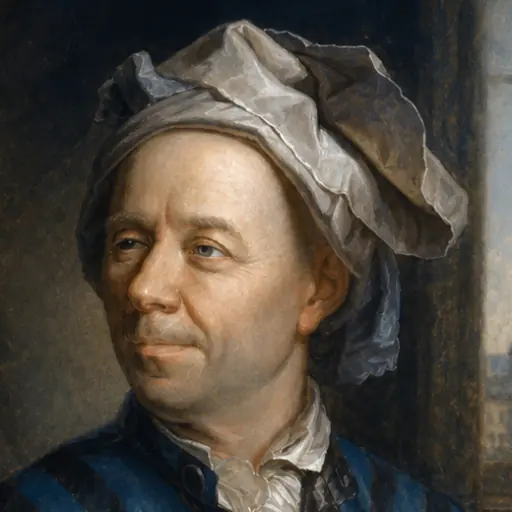
Translating geometric mechanics into analysis
Euler’s Mechanica gave the first extensive analytical formulation of Newtonian dynamics, turning Newton’s laws into the language of calculable differential equations.
Evidence for this connectionCurated sources and problems. Bring one discovery back from OEIS, Project Euler, MathOverflow, or arXiv.