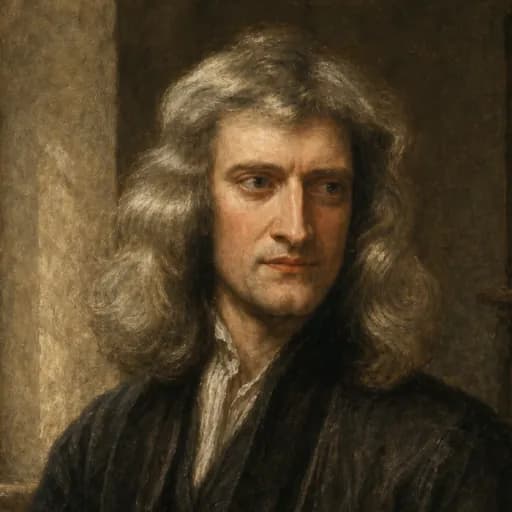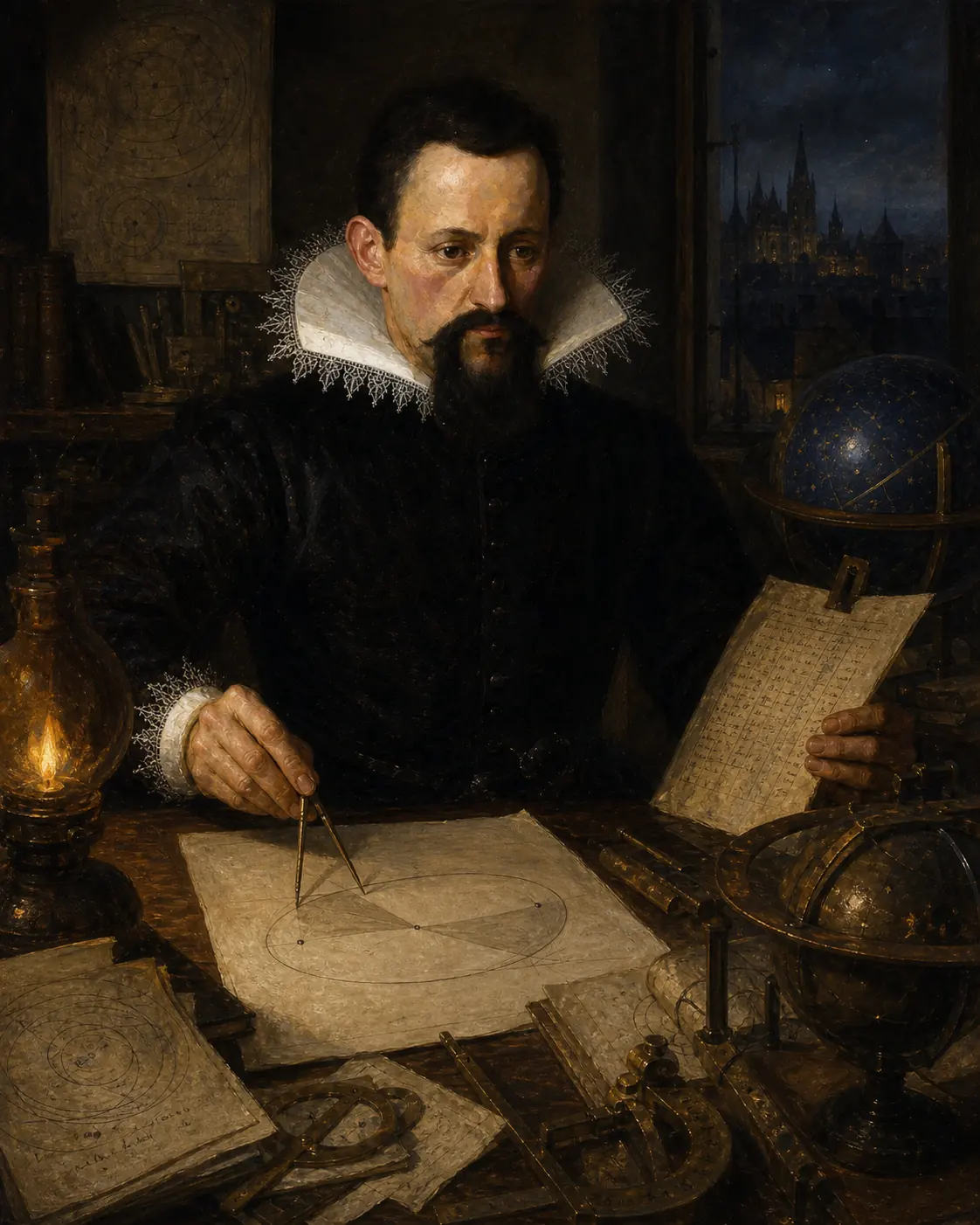
Johannes Kepler

Johannes Kepler

AD 1571 - AD 1630
Born in Weil der Stadt
Active in Prague
Renaissance

Life

An astronomer who changed the model when precise observations refused to fit beautiful circles. Originally a theology student, Kepler became a mathematics teacher and calendar maker in Graz and began working with Tycho Brahe in Prague in 1600. Tycho’s observations could reach a few arcminutes, and the famous discrepancy Kepler refused to ignore in his Mars model was about eight arcminutes. After years testing combinations of circles and epicycles, he adopted an ellipse and published the first two laws in 1609. In 1619 he stated that the square of a planet’s period is proportional to the cube of its orbit’s semimajor axis. Newtonian mechanics later explained these relations, but the history is better read as a chain from Copernican models through Tycho’s data and Kepler’s calculations to Newton than as one man shattering two millennia of dogma. Kepler also took a major role in the legal defense of his mother Katharina after accusations beginning in 1615; she was released in 1621.
In one line
If beautiful circles miss the observations, do not discard the eight arcminutes; change the model.

Decisive moments

AD 1609

Astronomia Nova — Kepler's 1st and 2nd laws

Tycho Brahe's Mars observations reached a precision of a few arcminutes in favorable cases. After years of comparing the data with competing models, Kepler replaced circular motion with an elliptical orbit.

AD 1619

Harmonices Mundi — Kepler's 3rd law

For planets orbiting the same central body, he stated that the square of the orbital period is proportional to the cube of the orbit’s semimajor axis.

AD 1620

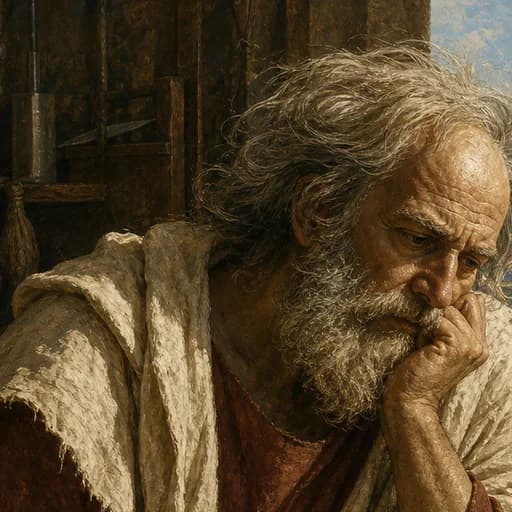
Defending his mother in a witchcraft case

When his mother Katharina was imprisoned on witchcraft charges, Kepler prepared legal and logical rebuttals. She was released in 1621, but the long proceedings and imprisonment gravely harmed the family.

If this person hadn't existed

This is a thought experiment about influence, not a verified historical fact.

Beginners compare planetary positions on circles and ellipses. Intermediate learners experiment with equal areas in equal times. Advanced learners test the period–semimajor-axis law on a log plot. Experts connect residuals in Mars observations, the ellipse equation, and Newton’s inverse-square law as different levels of mathematical explanation.

Influence network

Influenced by
Influenced

Beyond MathVoyage

Loading…