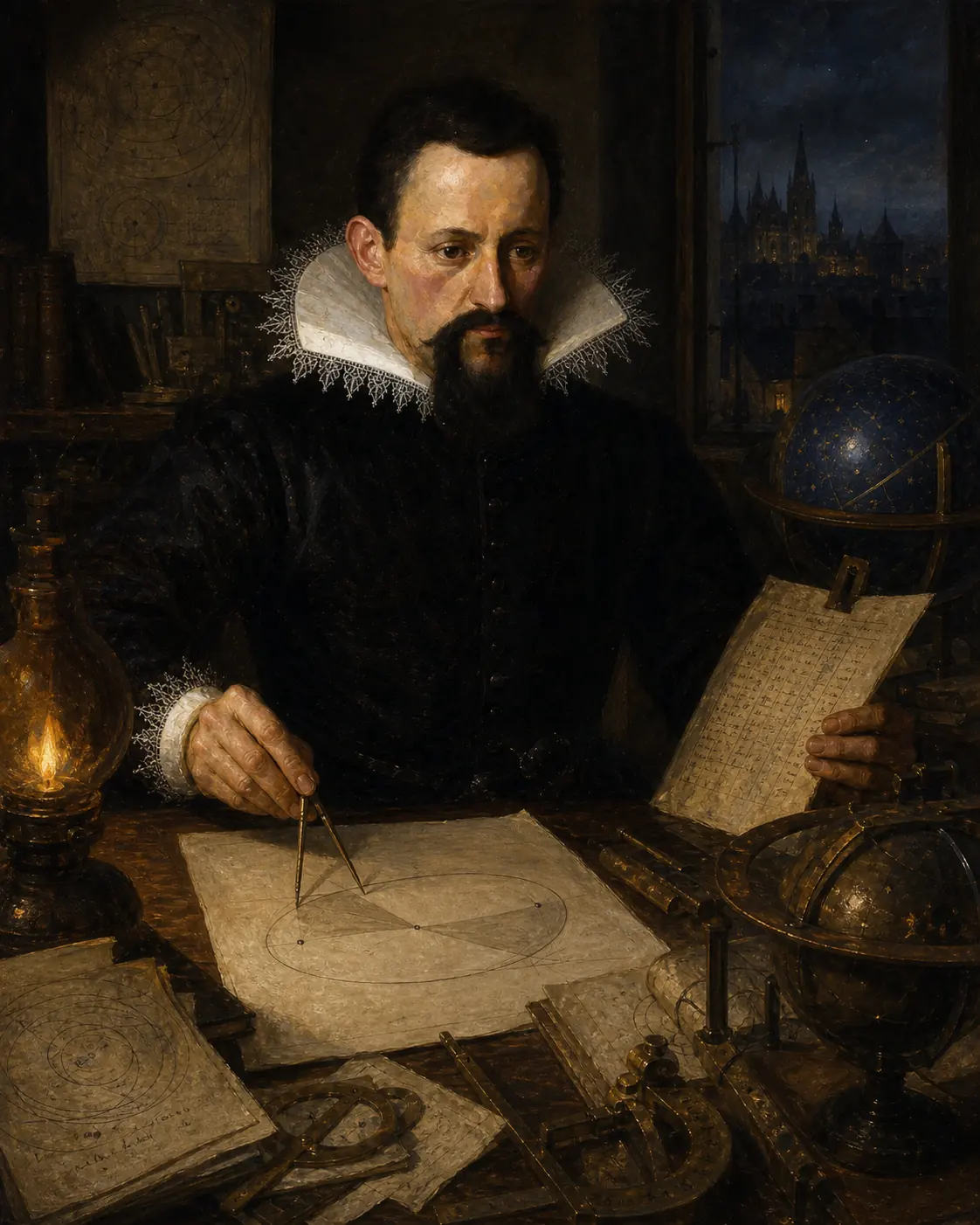
A likeness-informed editorial illustration of Johannes Kepler comparing Mars observations with circular and elliptical models in early-seventeenth-century Prague
AI editorial interpretation

An eight-arcminute discrepancy pushes the circle toward an ellipse

The face draws on the surviving Kepler portrait tradition, but this desk is not a record of one night or a reproduction of Tycho Brahe’s tables. Kepler worked through the Mars data for years before abandoning circular models; the ellipse and area law emerged by correcting failed models, not in one flash.

MathVoyage editorial direction · OpenAI image generation · historical likeness reference · 2026-08-07

Remember the mind, not only the dates

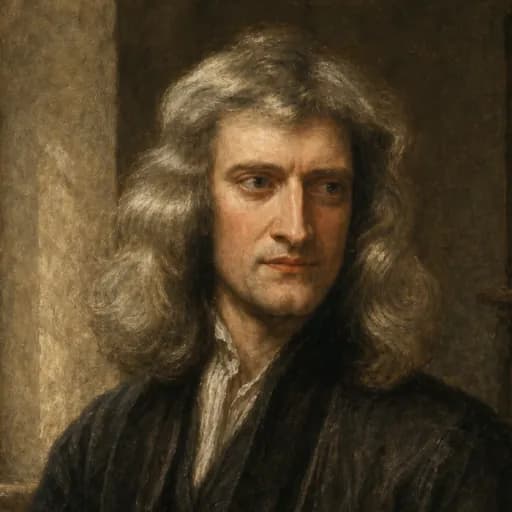
Johannes Kepler

AD 1571 - AD 1630
Thinking ground · Prague
Born · Weil der Stadt
RenaissanceMars data and eight arcminutesAbandoning the circle for an ellipseThe area law and years of calculation

The idea to carry forward

If beautiful circles miss the observations, do not discard the eight arcminutes; change the model.

Enter through one scene

AD 1609

Astronomia Nova — Kepler's 1st and 2nd laws

Tycho Brahe's Mars observations reached a precision of a few arcminutes in favorable cases. After years of comparing the data with competing models, Kepler replaced circular motion with an elliptical orbit.

Questions this person helps open

Concept ports to revisit, not another achievement list

These are reverse projections of existing editorial routes, not claims of direct influence or sole invention.

No concept port has yet been reviewed for this person.

Browse every concept route

PROFILE 02 · DEEP VOYAGE

How Johannes Kepler’s ideas moved

Instead of memorizing more dates, follow the world that shaped this mind, the scenes that changed its direction, and the questions carried onward.

CHAPTER 01 · PERSON AND PERIOD

What questions surrounded Johannes Kepler?

Before the finished achievement, read what this person treated as a problem and where the surviving evidence reaches its limit.

About 1 min read

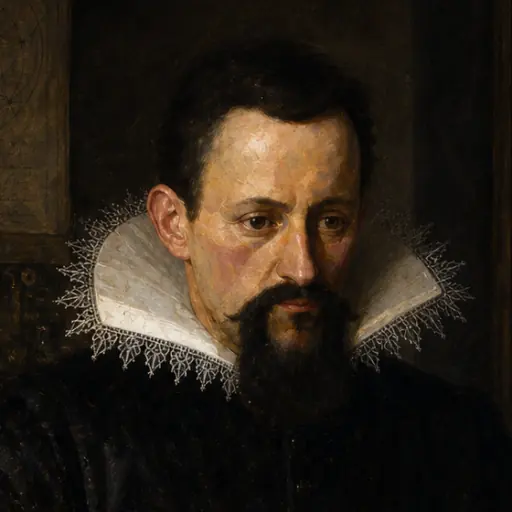
An astronomer who changed the model when precise observations refused to fit beautiful circles. Originally a theology student, Kepler became a mathematics teacher and calendar maker in Graz and began working with Tycho Brahe in Prague in 1600. Tycho’s observations could reach a few arcminutes, and the famous discrepancy Kepler refused to ignore in his Mars model was about eight arcminutes. After years testing combinations of circles and epicycles, he adopted an ellipse and published the first two laws in 1609. In 1619 he stated that the square of a planet’s period is proportional to the cube of its orbit’s semimajor axis. Newtonian mechanics later explained these relations, but the history is better read as a chain from Copernican models through Tycho’s data and Kepler’s calculations to Newton than as one man shattering two millennia of dogma. Kepler also took a major role in the legal defense of his mother Katharina after accusations beginning in 1615; she was released in 1621.
CHAPTER 02 · TURNING SCENES

3 turning scenes

Follow the moments when the idea moved one step further. Every scene continues through an evidenced place or an honestly labelled time context.

  1. Scene 1 / 3

    AD 1609Prague· Geographic context

    Astronomia Nova — Kepler's 1st and 2nd laws

    Tycho Brahe's Mars observations reached a precision of a few arcminutes in favorable cases. After years of comparing the data with competing models, Kepler replaced circular motion with an elliptical orbit.

  2. Scene 2 / 3

    AD 1619Prague· Geographic context

    Harmonices Mundi — Kepler's 3rd law

    For planets orbiting the same central body, he stated that the square of the orbital period is proportional to the cube of the orbit’s semimajor axis.

  3. Scene 3 / 3

    AD 1620Prague· Geographic context

    Defending his mother in a witchcraft case

    When his mother Katharina was imprisoned on witchcraft charges, Kepler prepared legal and logical rebuttals. She was released in 1621, but the long proceedings and imprisonment gravely harmed the family.

THOUGHT EXPERIMENT · NOT A FACT CLAIM

Erase Johannes Kepler from the map

This is a thought experiment about influence, not a verified historical fact.

Beginners compare planetary positions on circles and ellipses. Intermediate learners experiment with equal areas in equal times. Advanced learners test the period–semimajor-axis law on a log plot. Experts connect residuals in Mars observations, the ellipse equation, and Newton’s inverse-square law as different levels of mathematical explanation.

STANDING ON SHOULDERS · EVIDENCED CONNECTIONS

What arrived here, and what moved onward?

We do not draw a line merely because two people shared an era. Only connections traced through works, problems, or teaching appear with an explanation and evidence.

Johannes Kepler

Johannes Kepler

Renaissance

Received 1Passed on 1

What this person received

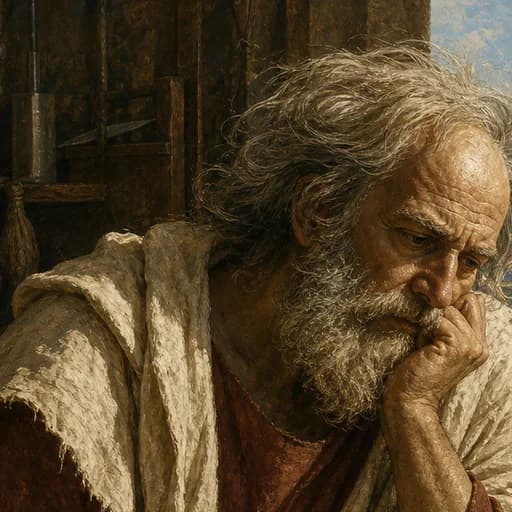
Archimedes
Influenced byArchimedes

Ancient volume methods enter astronomy

Kepler extended the Archimedean tradition of solid measurement while studying wine-barrel volumes. His infinitesimal slicing became a bridge toward modern integration.

Evidence for this connection

What later generations carried onward

Isaac Newton
InfluencedIsaac Newton

From planetary laws to inverse-square gravity

Newton combined Kepler’s third law with circular-motion dynamics to derive the inverse-square relation and explain Kepler’s orbital laws through universal gravitation.

Evidence for this connection

Beyond MathVoyage

Curated sources and problems. Bring one discovery back from OEIS, Project Euler, MathOverflow, or arXiv.