Another viewpoint1/11
Probability
Why can thousands of trials be predictable when one trial is not?
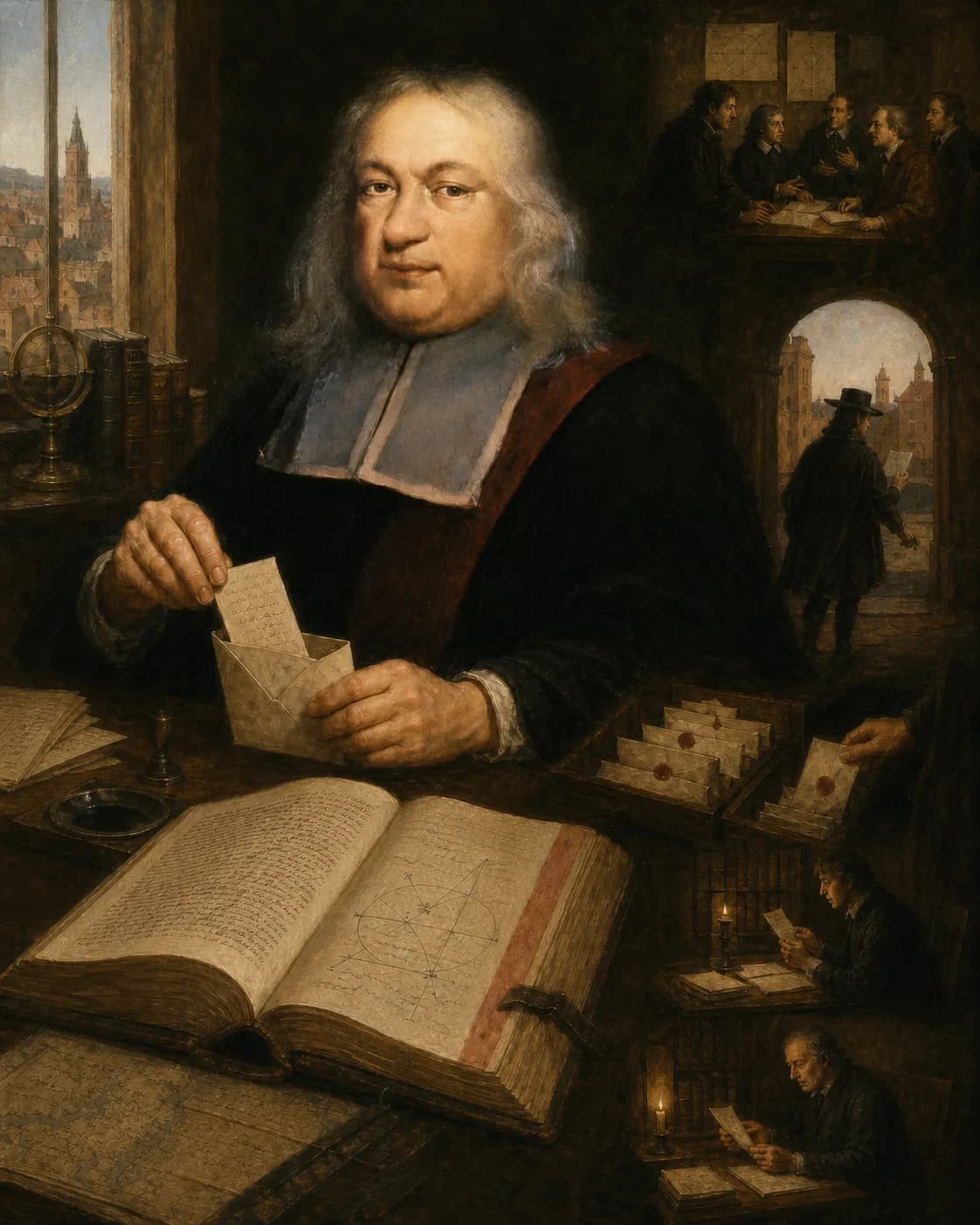
A magistrate's margin unsettles a European network of letters
The face draws on the surviving later portrait tradition of Fermat, but this room and letter scene editorially compress events from roughly 1637-1654 rather than recording one place or instant. The original margin note is lost, and the scene does not imply that Fermat lived in Paris or single-handedly invented probability or calculus.
MathVoyage editorial direction · OpenAI image generation · historical portrait-tradition identity reference · precise text-removal edit · 2026-08-07
Remember the mind, not only the dates
The idea to carry forward
I have a truly marvelous proof, but the margin is too narrow to contain it.Enter through one scene
He recorded the theorem and a claim of proof in a Latin Arithmetica. The original note is lost and is known through the posthumous edition published by his son in 1670.
Questions this person helps open
These are reverse projections of existing editorial routes, not claims of direct influence or sole invention.
Why can thousands of trials be predictable when one trial is not?
PROFILE 02 · DEEP VOYAGE
Instead of memorizing more dates, follow the world that shaped this mind, the scenes that changed its direction, and the questions carried onward.
CHAPTER 01 · PERSON AND PERIOD
Before the finished achievement, read what this person treated as a problem and where the surviving evidence reaches its limit.
A pioneer of number theory. Famous for Fermat's Last Theorem — a margin note that took 358 years to prove.
CHAPTER 02 · TURNING SCENES
Follow the moments when the idea moved one step further. Every scene continues through an evidenced place or an honestly labelled time context.
Scene 1 / 3
He recorded the theorem and a claim of proof in a Latin Arithmetica. The original note is lost and is known through the posthumous edition published by his son in 1670.
Scene 2 / 3
He discovered that a^p ≡ a (mod p) for prime p — 300 years later the basis of RSA encryption.
Scene 3 / 3
Letters with Pascal over a question from the gambler Chevalier de Méré — the first appearance of expected value.
THOUGHT EXPERIMENT · NOT A FACT CLAIM
This is a thought experiment about influence, not a verified historical fact.
The margin note is less important than the mathematics generated around his questions: descent arguments, results on primes, methods for tangents and extrema, and the probability correspondence with Pascal fed several later traditions.
STANDING ON SHOULDERS · EVIDENCED CONNECTIONS
We do not draw a line merely because two people shared an era. Only connections traced through works, problems, or teaching appear with an explanation and evidence.
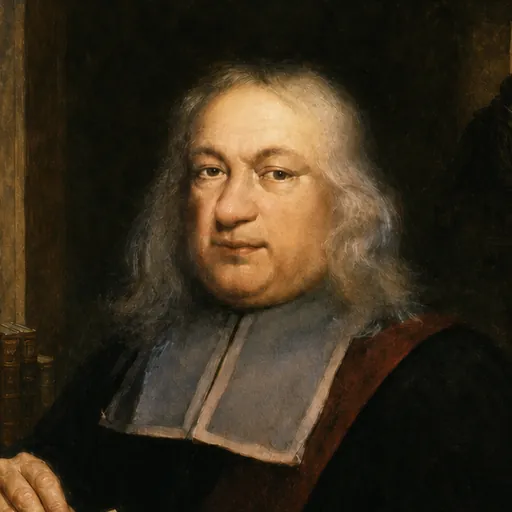
Pierre de Fermat
Renaissance
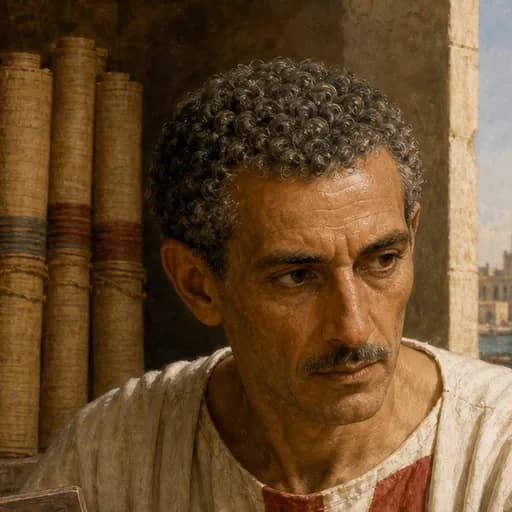
A 358-year journey begins in the margin of Arithmetica
While reading Diophantus’s Arithmetica, Fermat wrote his Last Theorem in the margin. An ancient study of integer solutions opened one of modern number theory’s longest problem lineages.
Evidence for this connection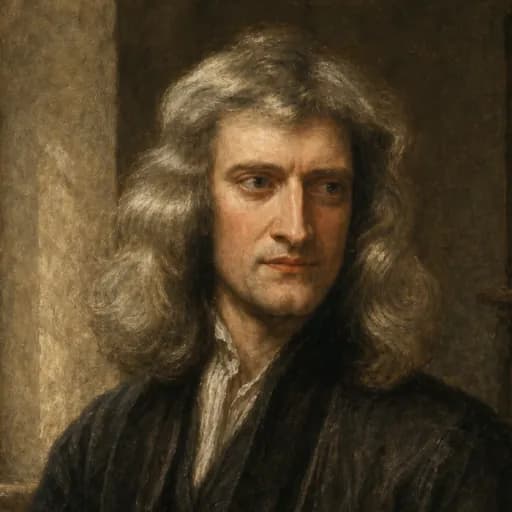
From tangents and extrema to fluxions
Fermat’s methods for tangents, maxima, and minima were powerful precursors for rates of change. Newton extended this problem family into a general calculus of motion and variation.
Evidence for this connection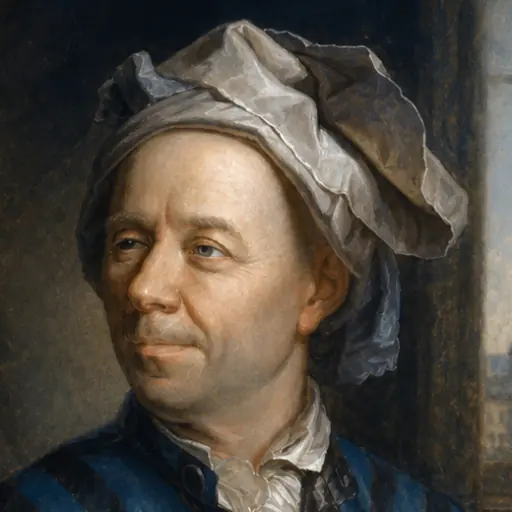
Turning unsupported claims into proofs
Euler systematically pursued Fermat’s number-theory challenges, extended Fermat’s little theorem, and treated the n=3 case of the Last Theorem.
Evidence for this connection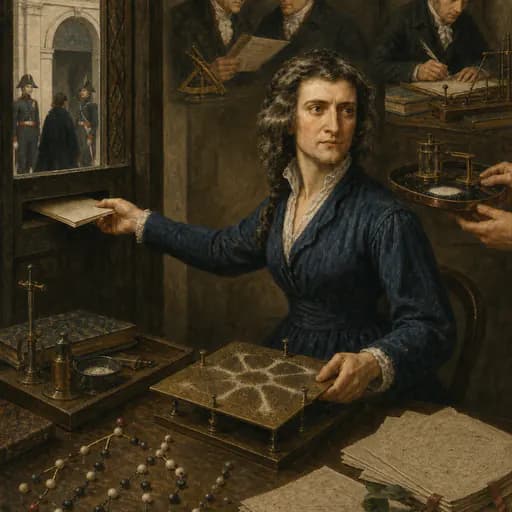
Taking on the Last Theorem under a pseudonym
Germain’s work on Fermat’s Last Theorem produced the theorem and prime condition bearing her name; barriers against women led her to correspond with Gauss under a pseudonym.
Evidence for this connection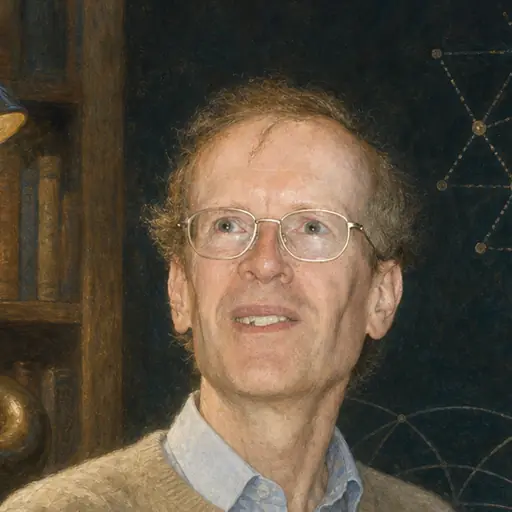
A marginal sentence becomes seven years of secret work
Wiles encountered Fermat’s Last Theorem as a child and made it a lifelong goal, eventually closing the 358-year problem by connecting elliptic curves and modular forms.
Evidence for this connection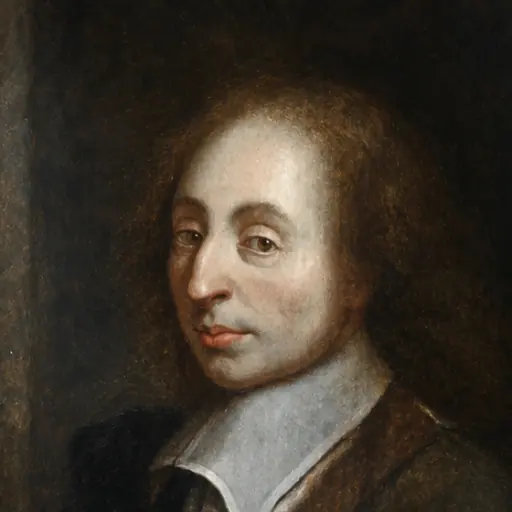
Letters about gambling create probability theory
In their 1654 correspondence on how to divide stakes in an interrupted game, Fermat and Pascal established foundations of expectation and combinatorial probability.
Evidence for this connectionCurated sources and problems. Bring one discovery back from OEIS, Project Euler, MathOverflow, or arXiv.