Central anchor3/11
Statistics and Inference
Through Statistics and Inference: How can repeated signals emerge from a single uncertain event?
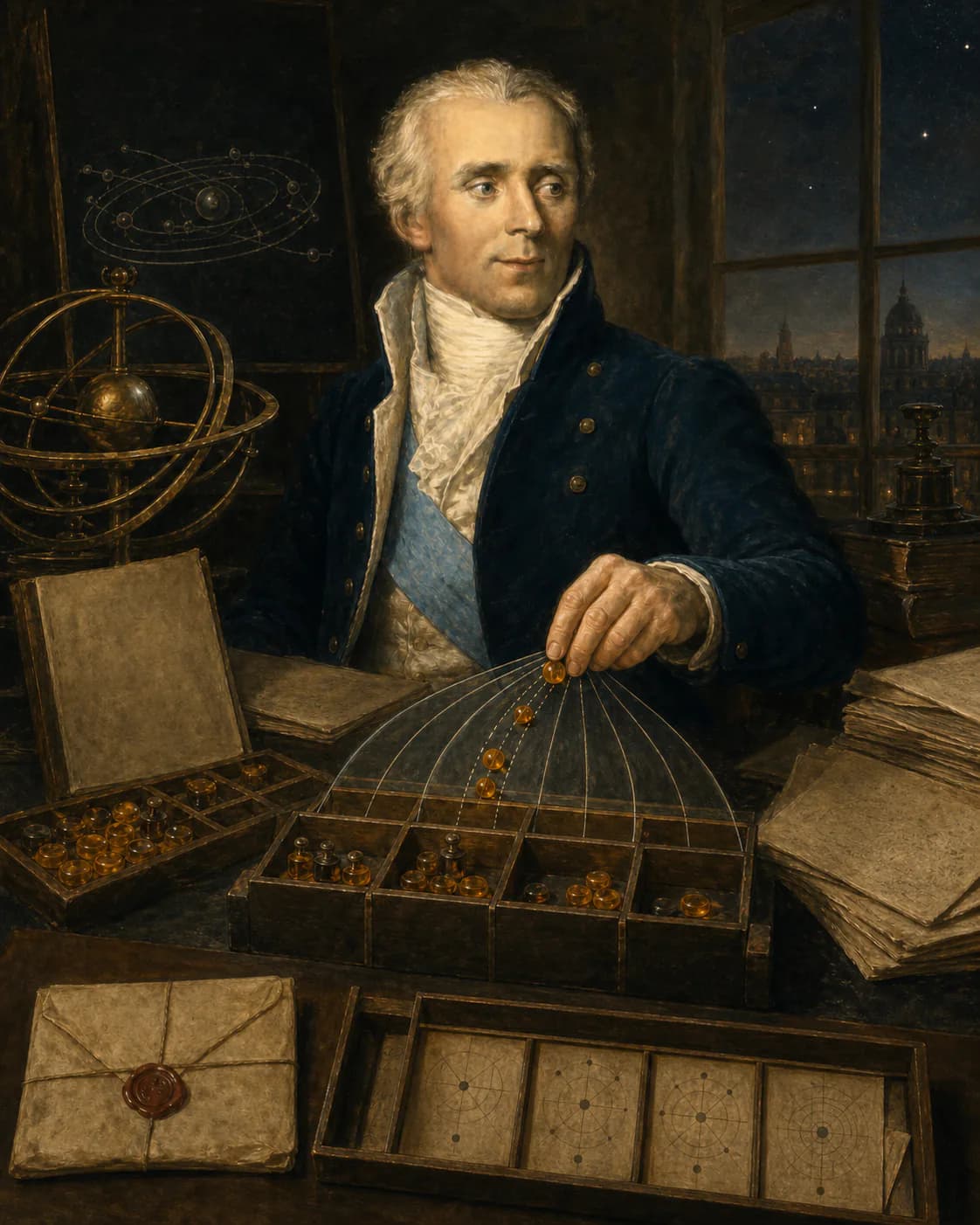
Working backward from visible results to the weight of hidden causes
The face uses the established Laplace portrait tradition. The 1812 Paris-style scene editorially links celestial mechanics and inverse probability; it does not treat the hypothetical Laplace's demon as a literal claim or his whole identity. The earlier Bayes-Price manuscript and later statistics remain separate stages.
MathVoyage editorial direction · OpenAI image generation · historical portrait identity reference · precise generated-text removal edit · 2026-08-07
Remember the mind, not only the dates
The idea to carry forward
“I had no need of that hypothesis” — an exchange traditionally reported with Napoleon.Enter through one scene
Five volumes published through 1825 analytically synthesized perturbation and gravitational methods developed across a research community; contemporaries also criticized sparse attribution of predecessors.
Questions this person helps open
These are reverse projections of existing editorial routes, not claims of direct influence or sole invention.
Through Statistics and Inference: How can repeated signals emerge from a single uncertain event?
Through Benford's Law: How can repeated signals emerge from a single uncertain event?
Why can thousands of trials be predictable when one trial is not?
PROFILE 02 · DEEP VOYAGE
Instead of memorizing more dates, follow the world that shaped this mind, the scenes that changed its direction, and the questions carried onward.
CHAPTER 01 · PERSON AND PERIOD
Before the finished achievement, read what this person treated as a problem and where the surviving evidence reaches its limit.
A French mathematician who synthesized celestial mechanics and probability. His five-volume Mécanique Céleste applied analytic mechanics to perturbations, tides, and planetary figures without claiming a finished account of the whole solar system. The famous “no need of that hypothesis” exchange with Napoleon is reported as an anecdote. His 1812 probability treatise and 1814 philosophical essay connected inverse probability, generating functions, approximations, and applications. The intellect later nicknamed “Laplace's demon” expresses classical determinism; chaos limits practical long-range prediction, while quantum theory challenges the classical-state premise itself.
CHAPTER 02 · TURNING SCENES
Follow the moments when the idea moved one step further. Every scene continues through an evidenced place or an honestly labelled time context.
Scene 1 / 3
Five volumes published through 1825 analytically synthesized perturbation and gravitational methods developed across a research community; contemporaries also criticized sparse attribution of predecessors.
Scene 2 / 3
It systematically developed generating functions, inverse probability, least squares, and probability approximations. Modern theorem names and final forms should not all be projected back onto Laplace alone.
Scene 3 / 3
He imagined an intellect knowing all forces and the instantaneous state of nature, able to calculate past and future. The label “demon” was attached later.
THOUGHT EXPERIMENT · NOT A FACT CLAIM
This is a thought experiment about influence, not a verified historical fact.
Beginners can compare probability in coin tossing with law-governed planetary motion. Intermediate learners compute Bayes rules and Laplace approximations; advanced learners separate determinism, sensitivity to initial conditions, and measurement uncertainty. Experts compare classical phase space, interpretations of probability, and quantum states without collapsing them into one slogan.
STANDING ON SHOULDERS · EVIDENCED CONNECTIONS
We do not draw a line merely because two people shared an era. Only connections traced through works, problems, or teaching appear with an explanation and evidence.
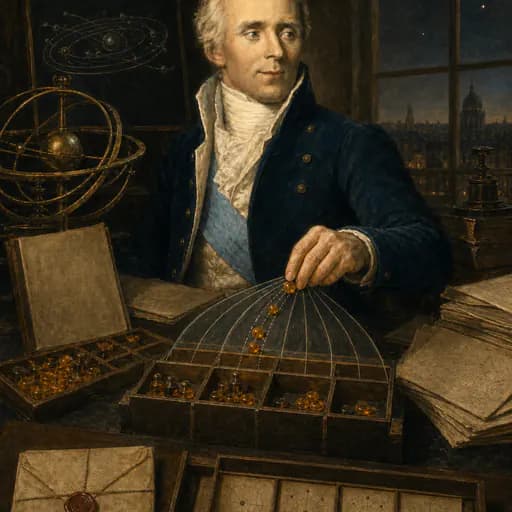
Pierre-Simon Laplace
Enlightenment
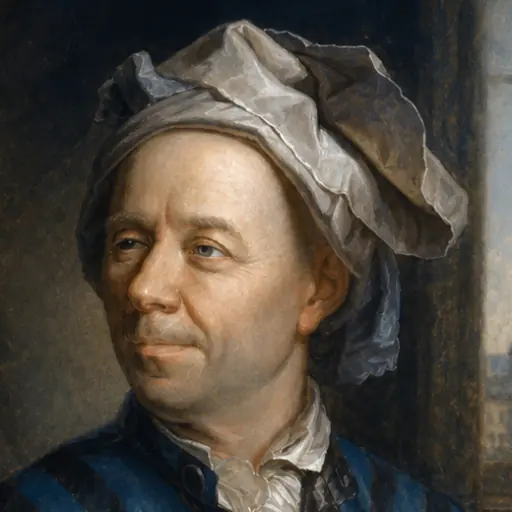
Celestial mechanics becomes a computational system
Laplace synthesized Euler’s analysis, differential equations, and celestial mechanics into a vast computational treatment of the solar system and probability.
Evidence for this connection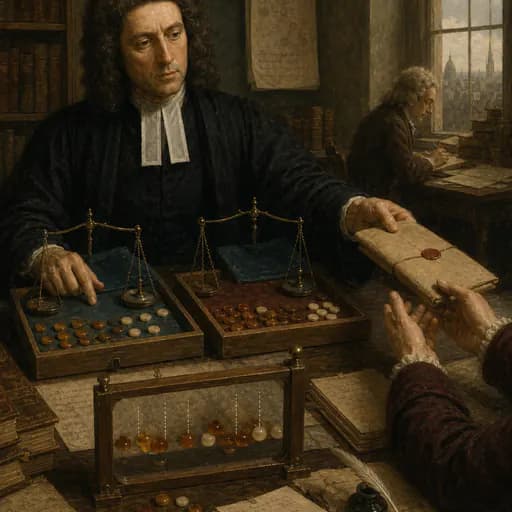
A posthumous essay becomes a general method of inference
After Bayes’s posthumous essay posed inverse probability, Laplace independently rediscovered and expanded the idea into a general method across astronomy and statistics.
Evidence for this connection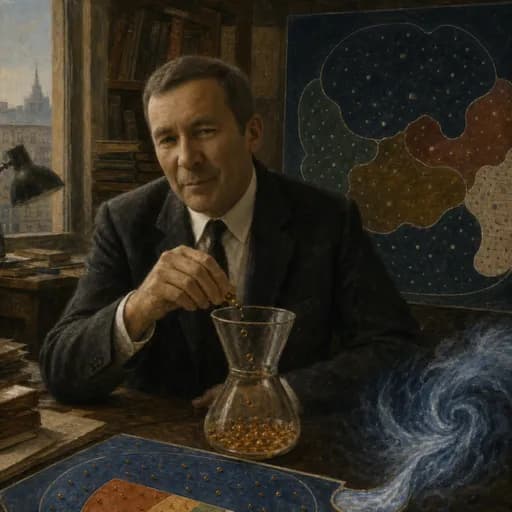
Classical probability becomes an axiomatic theory
After Laplace built a vast computational theory of classical probability, Kolmogorov’s 1933 axioms placed probability on measure theory and created its modern common foundation.
Evidence for this connectionCurated sources and problems. Bring one discovery back from OEIS, Project Euler, MathOverflow, or arXiv.